




Every load behaves differently on the road. It depends on what you haul, how you load, and where you work. Flatbed and tilt trailers are both popular for equipment and material transport, but they solve different problems.
This guide explains the real differences so you can choose the trailer that works best for your cargo, job site, and workflow.
Key Takeaways
- Use flatbed for pallets, steel, lumber, oversized loads, and any cargo that doesn’t roll on its own.
- Use a tilt deck for cars, skid steers, wheeled machinery, and low‑clearance equipment that benefits from ramp‑free drive‑on loading.
- Flatbeds offer higher payload capacity and more tie‑down points for secure transport.
- Tilt trailers provide safer, easier solo loading, especially on uneven or tight job sites.
- Flatbeds deliver better highway stability and road handling for heavy, stationary loads.
What Is a Flatbed Trailer?
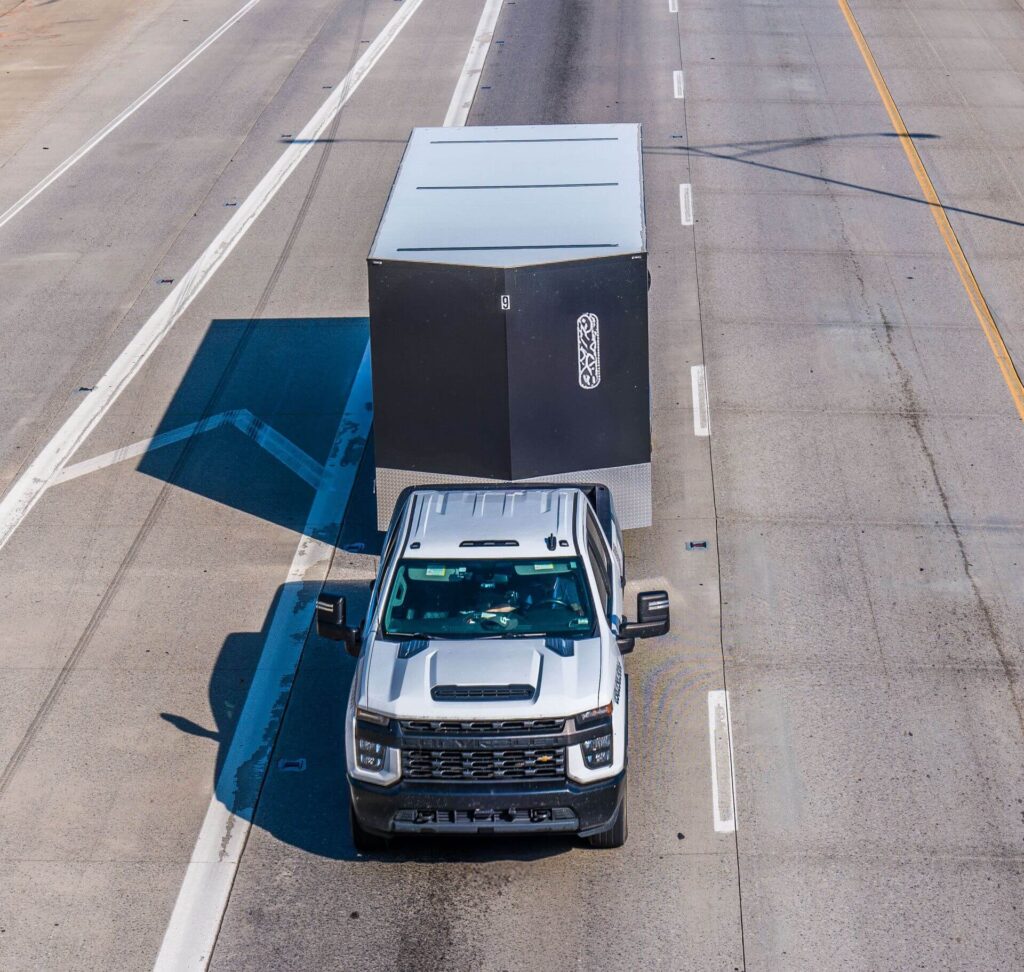
A flatbed trailer has a fixed, open deck with no sides or roof. The deck stays level at all times. You can load this trailer from any angle (top, side, rear) using ramps, forklifts, or cranes.
What Is a Tilt Trailer?
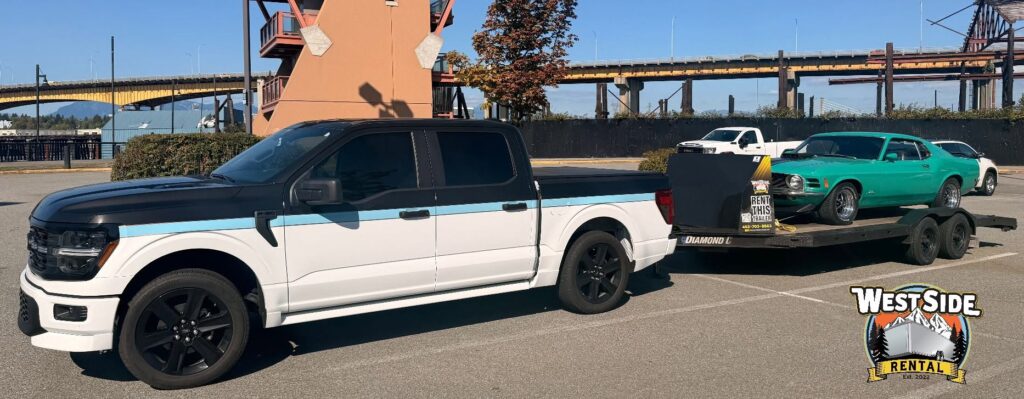
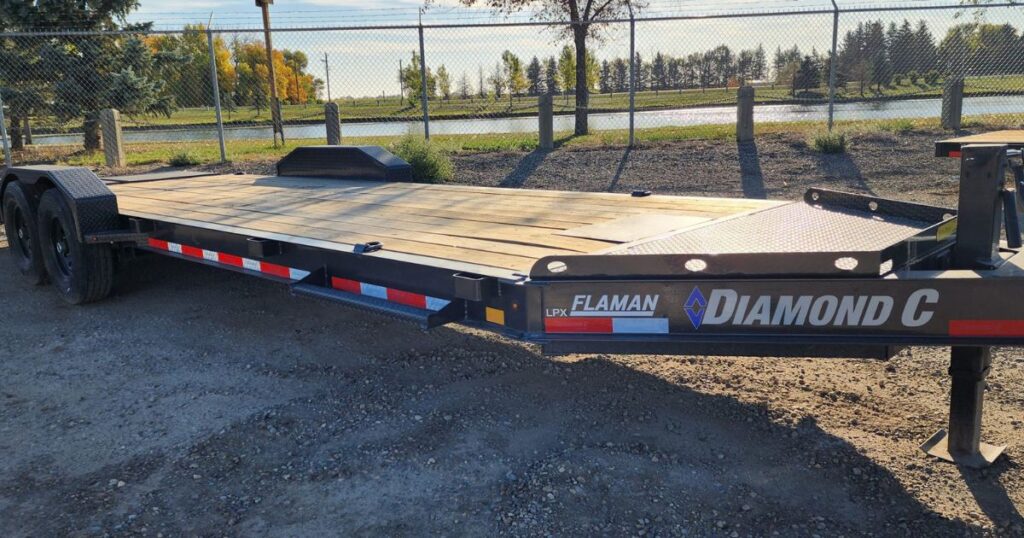
A tilt trailer is also a type of flatdeck trailer that uses a pivoting deck to create a smooth loading angle. When weight is applied, the deck tilts to the ground. Once the load is on, the deck levels back into place. Basically, you do not need any ramps for hauling this type of trailer.
These trailers come in many sizes and are towed behind a vehicle, typically a truck or SUV with enough towing capacity. It’s commonly used for moving, transporting tools, hauling motorcycles, or even turning into mobile workspaces.
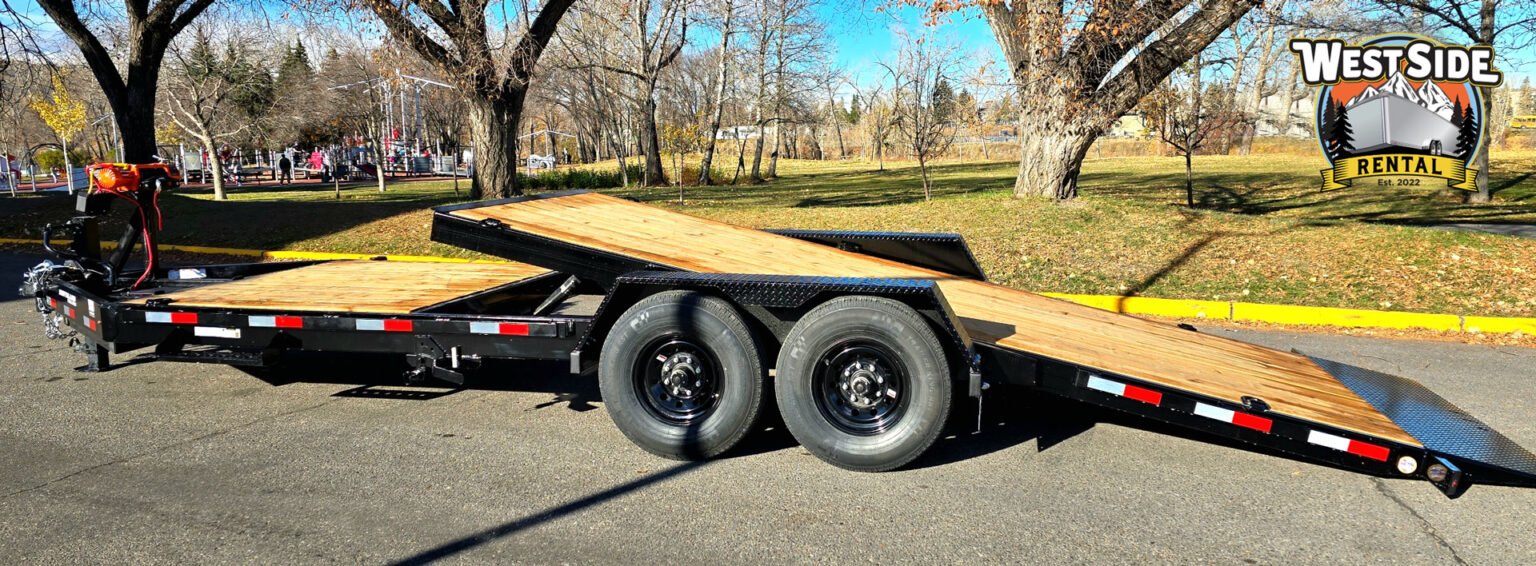
Typical Uses for Flatbed and Tilt Deck Trailers
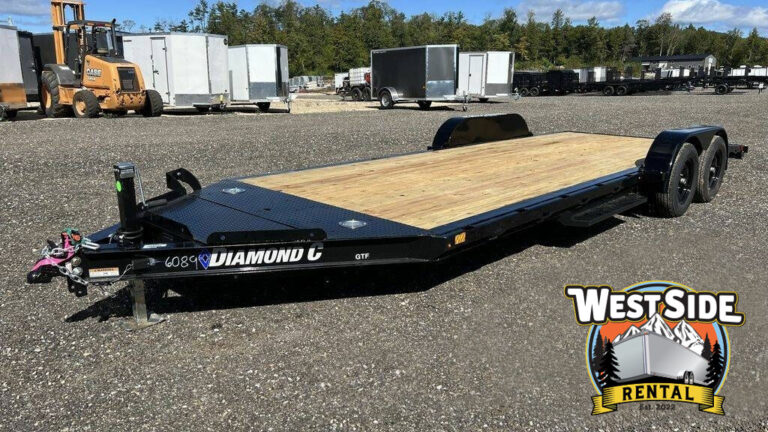
Flatbed trailers are commonly used for:
- Construction materials
- Palletized goods
- Heavy or irregular-shaped loads
- Equipment that does not roll
Because the deck stays level, flatbeds are strong and reliable for high-weight hauling. Its commonly used for construction materials, pallets, lumber, steel, and oversized loads.
Flatbeds work well when loading equipment is available and the cargo does not need to roll on and off the deck.
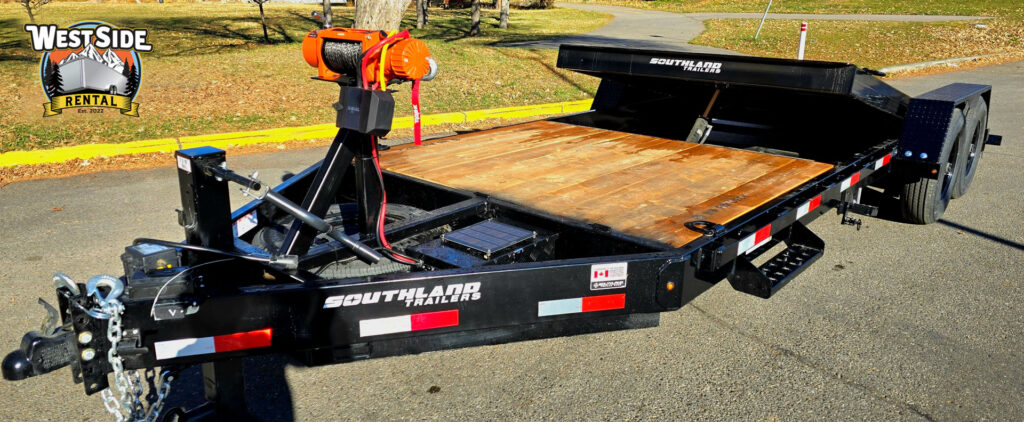
Tilt trailers are known for:
- Easy ground-level loading
- Faster loading and unloading
- Skid steers and mini loaders
- Safer operation for wheeled equipment
Since no ramps are needed, tilt trailers reduce setup time and loading risk. Ideal for cars, skid steers, scissor lifts, lawn equipment, and low-clearance machinery.
Also, it helpful for you is you are solo operators and jobs that require frequent loading
Key Features of Flatbed vs tilt deck trailer
| Feature | Flatbed Trailer | Tilt Deck Trailer |
|---|---|---|
|
Deck Type |
Fixed, non-moving deck |
Tilting deck that lowers to the ground |
|
Loading Method |
Ramps, forklift, or crane |
Self-loading tilt deck (no ramps needed) |
|
Best for Cargo |
Vehicles and wheeled equipment |
|
|
Deck Heigh |
Higher deck position |
Lower approach angle during loading |
|
Ease of Loading |
Moderate, depends on ramps |
Easy and fast loading |
|
Payload Capacity |
Usually higher |
Slightly lower due to tilt system |
|
Safety During Loading |
Depends on ramp setup |
More controlled and stable |
|
Job Site Use |
Best for yards and warehouses |
Ideal for uneven or tight spaces |
|
More preparation needed |
Minimal setup required |
|
|
Typical Use Cases |
Construction materials, steel, lumber |
Cars, skid steers, small machinery |
When to Choose flat deck Trailers
Flatdeck trailers are best when you need stability, strength, and steady towing. The deck sits between the wheels, keeping the load lower and improving balance on the road.
Flatdeck trailers also provide easy access to tie-down points along the deck. This makes it simple to secure palletized or stacked cargo using straps, chains, or binders.
Choose a flatdeck trailer if your cargo:
- Cargo size is standard
- Road stability is important
- Loading happens at warehouses
- Cost and efficiency matter
- Can be loaded with a forklift or ramps
- Does not require ground-level loading
When to Choose Tilt Deck Trailers
Choice when you are solo and need easy and safe loading. The tilting deck lowers to the ground, allowing equipment to roll on and off without ramps. This reduces setup time and lowers the risk during loading.
Once the load is in place, tilt deck trailers include built-in tie-down points to keep equipment secure during transport. This is important for vehicles and machinery that shift during travel.
Choose a tilt deck trailer if your cargo:
Has wheels or tracks
Has low ground clearance
Needs frequent loading and unloading
Must be loaded by one person
Tilt deck trailers are especially useful on uneven ground, tight job sites, and locations without forklifts.
The Closing Notes
There is no single best trailer. The right trailer and the right size depend on how your cargo moves.
- Choose a tilt deck trailer when your equipment rolls, has low ground clearance, or needs quick and safe ground-level loading.
- Use a flatbed trailer if your load is heavy, wide, or lifted into place.
Think about your cargo type, loading method, job site conditions, and how often you load. If you haul different loads, reviewing trailer specs and rental options can help you stay flexible.
faq
Frequently Asked Questions
What is the main difference between a flatbed and a tilt deck trailer?
A flatbed trailer has a fixed, level deck loaded with ramps or a forklift. A tilt deck trailer pivots to the ground, letting cargo roll on without ramps.
Do I need a forklift or ramps to load a tilt deck trailer?
No. The tilt deck lowers itself to ground level, so wheeled or tracked equipment can roll straight on and off without needing any ramps or a forklift.
Which trailer is better suited for solo operators?
Tilt deck trailers work best for solo operators. The deck lowers to the ground on its own, letting one person load equipment safely without any extra help.
Which trailer offers a higher payload capacity, flatbed or tilt deck?
Flatbed trailers usually offer higher payload capacity since the fixed deck stays level. Tilt deck trailers carry slightly less due to the tilting mechanism