

Trailer Brake Types: Electric vs Surge vs EOH Explained
- January 26, 2026
- Trailers Tips
- seo-manager
Trailer brakes come in different types, and each one works best for specific trailers, weights, and tow vehicles. Knowing the differences helps you choose the right setup, avoid towing problems, and stay safe on the road.
Here, we explore the most common types of trailer brakes, focusing on how they operate, their applications, and their benefits.
Just before starting, you need to know the types of controllers, and after that, you will get connected with the type of brake control system. So just keep this in mind to reconnect the broken system brief.
Types of Brake Controllers
Brake controllers control how and when electric trailer brakes apply. Trailer brakes are mainly of two types: Time-delayed Brake Controller and Proportional Brake Controller. They are installed inside the tow vehicle and connect to the trailer through a 7-pin wiring plug. But the key difference between them is that each one behaves differently when you press the brake pedal. Let’s let you know very shortly.
1. Time-delayed Brake Controller
A time-delayed brake controller applies trailer brakes after a short delay. When you press the brake pedal, the controller waits for a moment, then sends power to the trailer brakes. The braking force increases slowly based on the setting you choose.
This type needs manual adjustment when trailer weight changes. If the trailer is heavier, more power is needed.
Time-delayed controllers are usually simple and lower in cost, and not suitable for traffic or downhill towing. Because it’s less smooth and doesn’t respond immediately.
2. Proportional Brake Controller
A proportional brake controller applies trailer brakes at the same time as the tow vehicle. When you brake lightly, the trailer brakes apply lightly. When you brake harder, the trailer brakes apply harder.
This creates smooth and balanced stopping. The controller adjusts automatically and needs less manual tuning.
Proportional controllers are best for heavier trailers and are commonly recommended for rental trailers with electric or electric-over-hydraulic brakes.
Main Types of Trailer Brakes
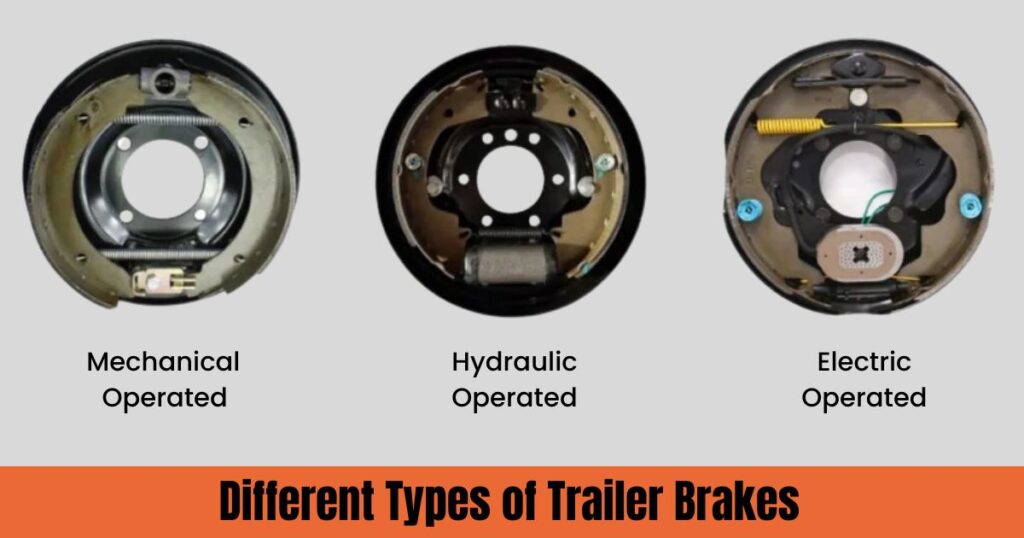
Trailer brake systems are 3 types:
- Electric brake system
- Surge brake systems
- Electric-over-hydraulic systems
Each system offers a different level of control and stopping power.
1. Electric Trailer Brakes (Most Common in Rentals)
Electric trailer brakes are the most common brake type used on rental trailers. As mentioned, electric in the name, this means its operate with electricity. This brake allows the driver direct control over how much braking power the trailer uses. Also give you more stability and precision, which makes towing safer, especially with heavier loads.
How Electric Trailer Brakes Work
The brake controller sends power to the trailer from the tow vehicle. When you press the brake pedal of your towing vehicle, the brake controller sends an electric signal to the trailer.
That signal activates a brake magnet and create electromagnetic force inside each wheel. The magnet pulls against the brake drum and pushes the brake shoes outward.
As the brake shoes press against the drum, the trailer slows down. The harder you brake, the stronger the braking force becomes. This system allows smooth and controlled stopping.
With a time-delayed controller, the brakes apply after a short delay, and with a proportional controller brakes apply at the same time.
Trailers That Commonly Use Electric Brakes
These electric brakes are used on many medium to heavy-duty trailers. The most common uses trailer are enclosed trailers, car haulers, flat deck trailers, and dump trailers. These trailers often carry heavy loads, so adjustable braking is important.
2. Surge (Hydraulic) Trailer Brakes
Surge brakes use hydraulic pressure instead of an electric signal. The brake uses self contained system that uses the trailer’s own momentum to turn active the brake. This system works automatically and does not need a brake controller. Automatic means its work based on trailer movement and cannot be adjusted by the driver.
Overall, this system is simple and reliable, but it gives you less control over your vehicle.
How Surge Brakes Work
When the tow vehicle slows down, the trailer moves forward.
This forward movement compresses the coupler at the front of the trailer. Inside the coupler, a hydraulic actuator builds pressure.
The pressure sends brake fluid to the trailer brakes, which slows the trailer down.
Common Use Cases
Surge brakes are commonly used on boat trailers and small utility trailers. If you are mostly towing heavy-duty types of trailer likes enclosed or open trailers, then this is not suitable for you.
3. Electric-Over-Hydraulic (EOH) Brakes
Electric-over-hydraulic brakes combine electric control with hydraulic braking power. This system operates with a proportional brake controller. The combination of hydraulic brakes and an electric controller offers smoother, controlled stopping than basic electric or surge brakes.
These brakes usually work best for heavy loads by converting the electric command into hydraulic force.
How Electric-Over-Hydraulic Systems Work
When you press the brake pedal, the brake controller sends an electric signal. A hydraulic pump converts that signal into hydraulic pressure. The proportional controller system forces the braking to match how hard you press the brake.
Some systems can work with time-delayed controllers, but proportional controllers give smoother control.
When These Brakes Are Used
Electric-over-hydraulic brakes are most suitable for heavy-duty enclosed trailers, Commercial and Equipment trailers. They are best for heavy trailers where smooth and strong braking is needed.
Legal & Safety Considerations Users Must Know
- Most regions require trailer brakes once a trailer reaches a certain weight.
- Electric brake systems often require brakes on all axles.
- Using the correct brake system reduces stopping distance and trailer sway.
- Always check local towing laws before towing a trailer.
Recent posts


Reach Us
Share
LinkedIn
X
Pinterest
Facebook