

E-Track Guide: How It Works, Components, Weight Limits & Uses
- January 21, 2026
- Towing Tips
- seo-manager
Keeping cargo safe during transport is not easy. Items can slide, tip over, or fall when you brake or turn. This is one of the most common problems people face when towing or hauling loads.
E-Track helps solve this problem. It gives you a strong and flexible way to secure cargo inside a trailer or vehicle.
You will often see E-Track used in enclosed trailers, cargo trailers, box trucks, and utility vans. But the most common questions that arise are: what does E-Track actually do, where can you get it, and how does it work? Don’t worry—we will clear up all of these questions today. Let’s get back to the main point.
What Is E-Track?
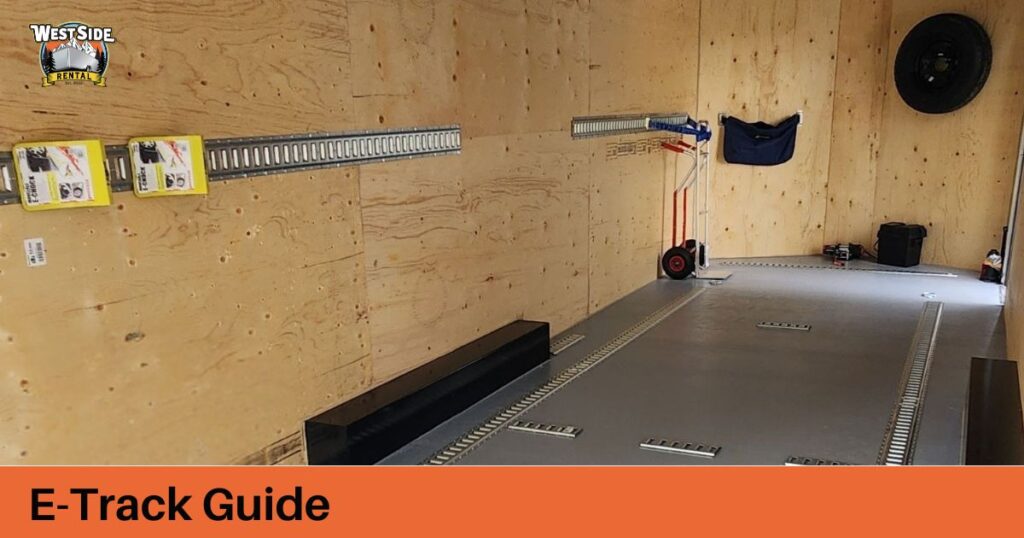
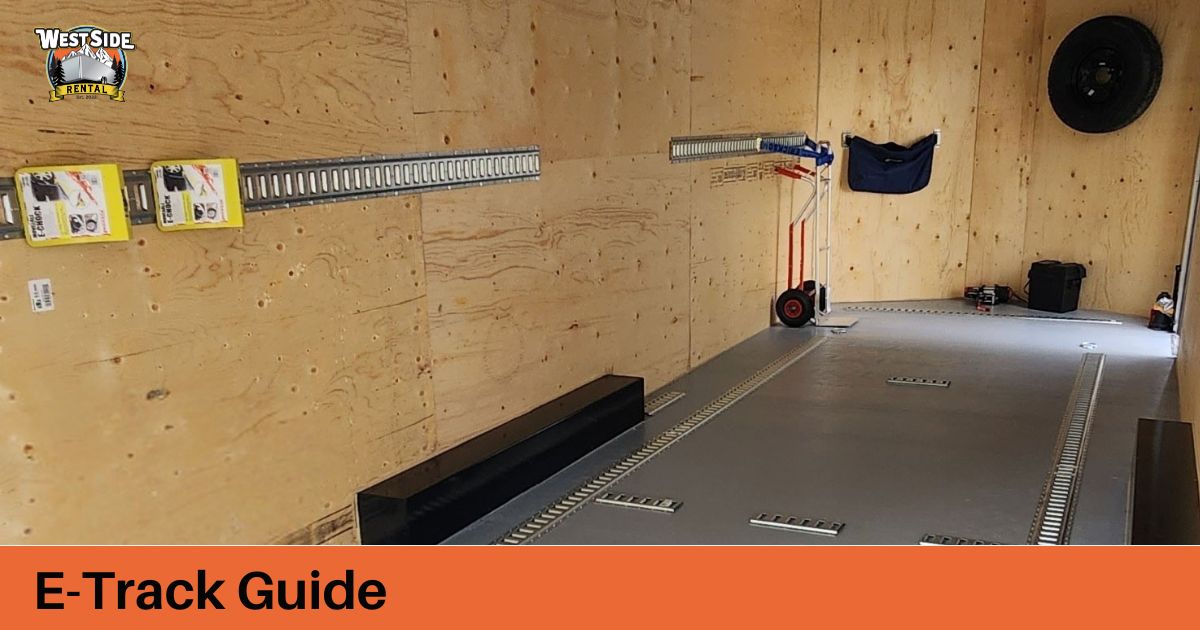
E-Track is known as a logistics track. It is a cargo securement system made from strong steel rails and locking accessories. It is built to keep cargo from shifting while you drive. This metal rail with slots is installed on the trailer wall or floor.
When you attach straps or bars to those slots and lock them in place, the cargo stays secure and the haul becomes more stable. This system spreads the weight across the rail instead of stressing one small point, which helps protect both the cargo and the trailer.
Compared to traditional tie-down points like fixed D-rings or rope hooks that offer little control, E-Track lets you move straps anywhere along the rail. This gives you better adjustability, a stronger hold, and safer load control overall.
E-Track Working Principle & Components
As you already know, E-Track creates a strong and adjustable system to hold cargo in place during transport. The key is installing the rails based on your hauling needs and requirements. Various accessories can then be inserted into the slots or holes.
E-Track Rail
The E-Track rail is the foundation of the system. It works by using a strong steel rail mounted to the trailer wall or floor. These rail slots allow you to place straps and accessories exactly where you need them instead of relying on fixed tie-down points.
E-Track rails are installed based on specific needs. The main types are horizontal rails, vertical rails, and floor E-Track. Each one works for a different type of cargo.
Horizontal E-Track
Horizontal E-Track runs side to side and is best for general cargo like boxes and equipment. Straps attach across the load and pull it tight against the wall, helping stop side-to-side movement.
Vertical E-Track
Vertical E-Track runs from the floor to the ceiling. This setup works best for tall or uneven cargo. Because straps can be placed at any height, vertical E-Track is useful when loads vary in size or shape.
Floor E-Track
Floor E-Track is installed directly into the trailer floor. It is used to stop cargo from rolling forward or backward. Recessed floor E-Track sits flush with the floor and reduces trip risk, while surface-mounted rails sit higher and must be driven over with care. Floor E-Track is common for motorcycles, equipment, and wheeled cargo.
E-Track Straps
E-Track straps are heavy-duty tie-down straps that lock into the rail slots and apply tension to hold cargo in place. You will find different strap lengths, which are identified by color coding. The colors are yellow, gray, and blue.
Yellow straps are 12 feet, gray straps are 16 feet, and blue straps are 20 feet. This color system helps users quickly choose the right strap for the job and achieve proper tightening.
There is one more important thing to know about tightening: ratchet straps and cam buckle straps.
Ratchet straps are used for heavy loads because they provide strong, controlled tension. They are ideal for machines, furniture, and large equipment.
On the other hand, cam buckle straps are better for lighter cargo and are quicker to use. Always choose the right strap type and use it correctly.
E-Track Rings
E-Track rings snap into the rail and create a hook point wherever you need one. They are useful for attaching chains, ropes, or standard tie-down straps. This makes E-Track much more flexible than fixed tie-down points.
Some Essential Accessories You’ll Need
These are some essential parts that improve safety and help control specific types of cargo.
Idler Assembly
An idler assembly helps guide the strap when tightening. It makes ratcheting smoother and reduces friction.
This is useful when securing tires or heavy items and helps to keep the strap in the right position.
E-Chock
An E-Chock is used to hold wheels in place during transport. It locks into the E-Track rail on the trailer floor. Once installed, it stops wheels from rolling forward or backward. It is commonly used for motorcycles, ATVs, and other wheeled cargo to keep vehicles stable during transport.
360 E-Slot Swivel
The 360 E-Slot Swivel allows straps to rotate freely. This helps prevent twisting and allows better strap angles around cargo. It also reduces strap twisting and makes tightening easier.
E-Track Storage Hooks
E-Track storage hooks clip into the rail and are used to hang straps, tools, and gear. They help keep the trailer floor clear and make equipment easy to access, improving organization and safety.
E-Track Weight Ratings & Load Limits
This is very important to understand when using an E-Track system. Every E-Track setup has a Working Load Limit (WLL). This is the maximum safe weight the system can hold during use.
Both the rails and the straps have their own weight ratings. Rails are made from strong steel and can hold heavy loads, but straps also have limits. You must check both before securing cargo.
The system is only as strong as its weakest part. For example, if a strap has a lower rating than the rail, the strap sets the limit. Always make sure you do not overload any component.
E-Track ratings are usually divided into three categories:
- Light-duty for small household loads
- Medium-duty for moving or rental trailers
- Heavy-duty for commercial cargo
Always match your cargo weight to the correct rating to keep your load safe and secure. Using the right rating protects your cargo, your trailer, and everyone on the road.
Where E-Track Is Commonly Used
There are no strict limits on where E-Track can be used. You can install it in almost any trailer or vehicle where cargo needs to stay in place. Most commonly, it is used in enclosed trailers, cargo trailers, moving trailers, and box trucks.
It is also not a permanent installation. You can remove it anytime if needed. E-Track simply works as a helpful tool to make your loading safer, more protected, and smoother during transport.
Recent posts


Reach Us
Share
LinkedIn
X
Pinterest
Facebook