




Flatdeck trailers are most commonly used in the logistics & transportation industry. The trailers are wide and used to move heavy or tall loads because they have no sides or roof.
This is the main advantage of a flatdeck trailer: you can load from any side. You can load from the rear, side, or even from above with a crane.
Many people use the terms flatdeck and flatbed in the same way. In most cases, they mean the same thing. But there are also different types of flatdeck trailers. Each type is built for a specific job. Today, we will talk about it and help you choose the right one.
Key Takeaways
- Flatdeck trailers carry heavy or large loads with easy loading from all sides.
- Different types are built for different jobs.
- Choose based on load size, weight, and height.
- Match the trailer with your towing setup and loading method.
What Is a Flatdeck Trailer?
A flatdeck trailer is an open trailer with a flat surface and no sides, roof, or doors. This is designed for transporting cargo, large, heavy, or irregularly shaped items.
You will often see flatbed trailers used to transport cargo, as well as in industries like construction, farming, and logistics. In Calgary, people use the trailer mostly for hauling cargo that does not require more secure requirements like an enclosed trailer.
Need a Trailer This Week?
Book your trailer today and get free delivery on 7+ day rentals across Alberta
Main Types of Flatdeck Trailers
The most common and most used flat decks are:
- Flatdeck trailer
- Deckover trailer
- Tilt deckover trailer
Let’s help you find the key difference and choose the best suitable one for your needs.
Standard Flatdeck Trailer
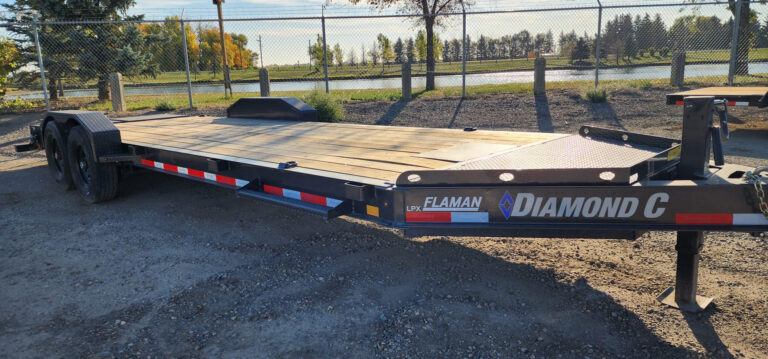
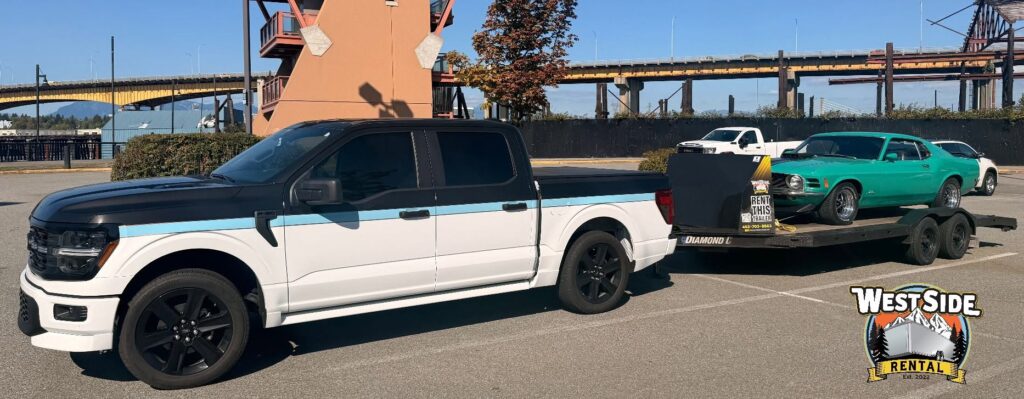
This is the most common and widely used option. People call it a flatdeck (or flatbed) trailer. The trailer is usually outside the wheel from the deck and has a flat surface and a lower low-profile design (lower deck height that allows easier loading and unloading).
For that reason, the deck sits closer to the ground and makes it easier to load heavy equipment using ramps. This could be perfect for hauling vehicles or motorcycles, because the wheel is outside of the deck and you get the advantage of keeping it on the trailer.
Still, you can also choose this trailer for:
- Small to medium equipment
- Building materials
Deckover Flatdeck Trailer
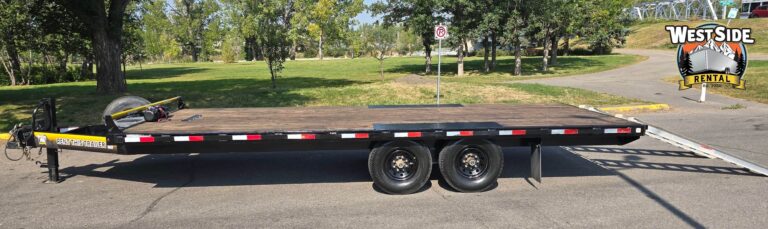
A deckover trailer has a full-width deck surface with wheels above the deck. This creates a full-width platform without any wheel well restrictions. The deck usually has higher ground clearance because of the use of this trailer.
This type is best suited for wide equipment and materials that need more space across the deck. For that reason, it has a height higher than the ground, which is useful on rough or uneven job sites.
Tilt Deck Trailer
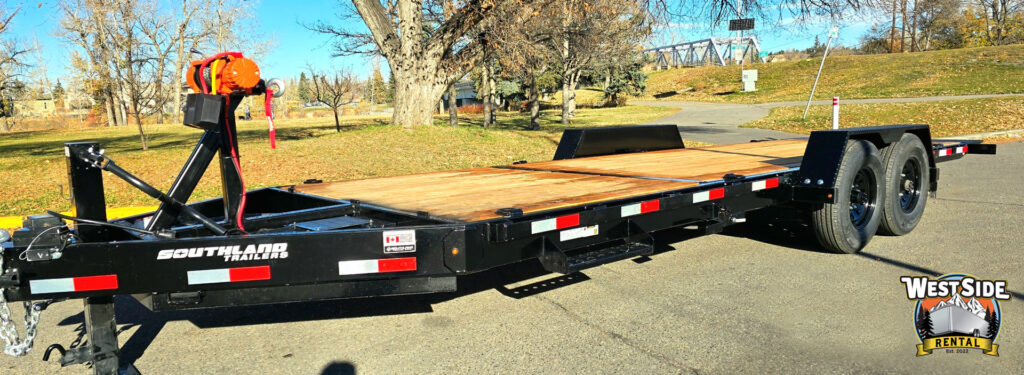
A tilt deck trailer solves one of the biggest problems in loading ramps. Normal trailers need ramps for loading and unloading things.
By solving this problem, instead of using ramps, the trailer tilts backward, creating a natural loading angle. This reduces effort and improves safety, especially when loading wheeled equipment.
Tilt trailers are often used for:
- Cars and small vehicles
- Skid steers
- Light machinery
They are a strong choice when fast and safe loading is a priority.
Gooseneck Flatdeck Trailer
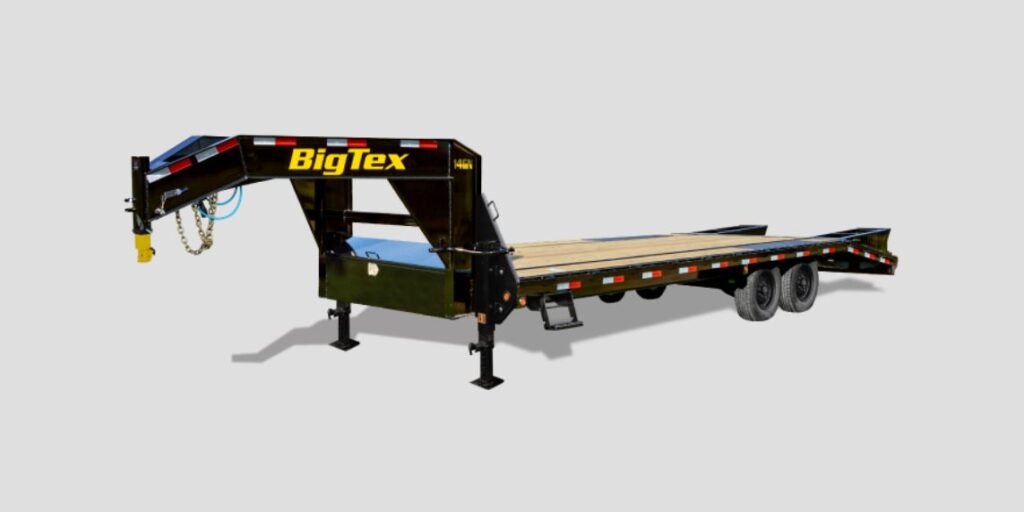
A gooseneck flatdeck trailer is a type of trailer that connects to a hitch inside the bed of a truck instead of the rear bumper. This design provides better stability and weight balance, allowing it to carry heavier and longer loads safely. As a result, you can handle heavier loads and longer trailer lengths with better control.
Gooseneck flatdeck trailers are commonly used for:
- Heavy equipment, such as hauling machinery
- Long-distance hauling of raw materials
- Commercial transport, like construction equipment
Step Deck / Drop Deck Trailer
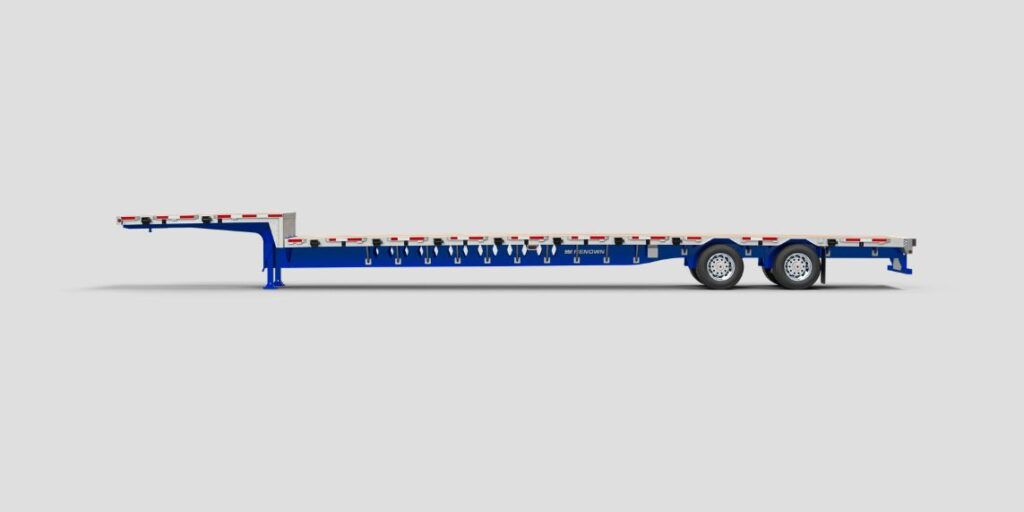
A step deck trailer has two levels: a higher front deck and a lower rear deck. The trailer is designed for carrying taller loads without breaking height limits on the road. The taller loads, like oversized cargo, machinery, and construction equipment, such as transformers.
The lower rear section gives extra vertical space, which is often required for industrial equipment like transformers and machinery.
This one is a practical solution when height becomes a restriction.
Lowboy Trailer (Double Drop)
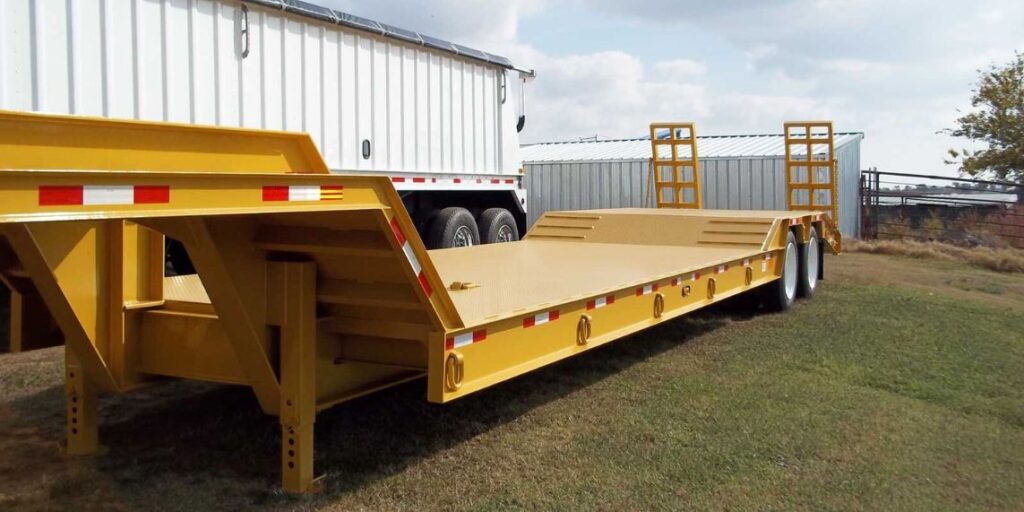
A lowboy trailer sits very close to the ground and is designed for extreme height clearance. The low deck is near the ground, and this is suitable for you when you need to carry very tall and heavy-duty equipment that can easily fit on that trailer.
Normally, a lowboy trailer size is often 18–24 inches and can haul 40,000–80,000 lbs.
This type is often used for:
- Excavators
- Bulldozers
- Large construction machines
RGN (Removable Gooseneck) Trailer
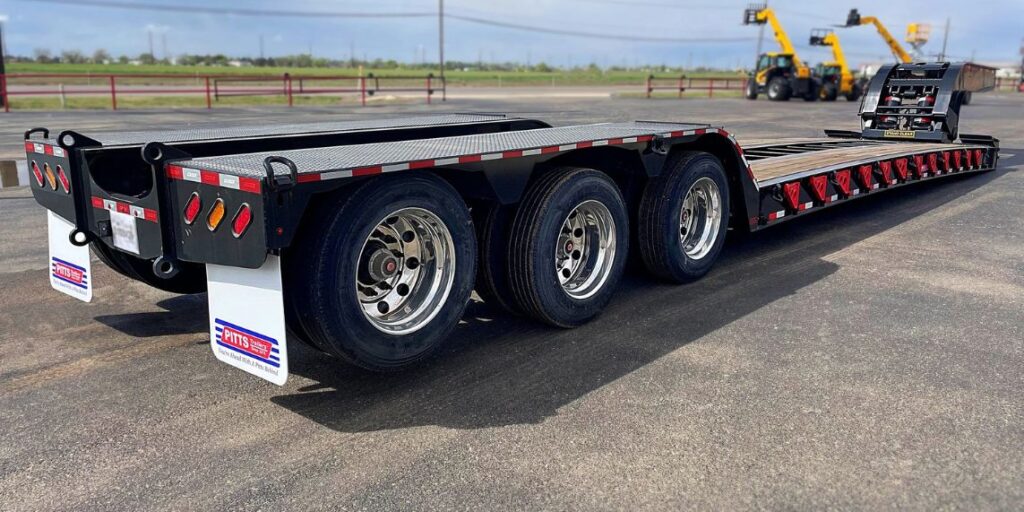
As you already guessed, the name “removable” means something detachable. Yes, an RGN trailer takes the gooseneck design one step further by allowing the front section to detach.
This is mostly used for hauling rock trucks like John Deere 310E, because this type of heavy load cannot be lifted easily, so it needs to be driven directly onto the trailer. This solves the problem and makes it useful for tracked machinery that cannot be easily loaded with ramps.
Heavy Equipment / Hotshot Flatdeck Trailer
Hotshot flatdeck trailers are lighter, more flexible, and faster for hauling. They are designed for smaller commercial loads that need quick transport.
Typically ideal for hauling machinery directly to job sites and an alternative to larger semi trucks.
This type is ideal for:
- Medium-weight loads
- Fast delivery jobs
- Daily contractor use
How to Choose the Right Flatdeck Trailer Type
Choosing the right trailer is not about picking the most popular option. It is about matching the trailer to your load.
Start with the weight. Every trailer has a GVWR (Gross Vehicle Weight Rating) and a payload capacity. The GVWR is the total weight the trailer can handle, while the payload is the actual cargo weight you can carry.
Next, think about the size of your load.
- If your load is wide, a deckover trailer will give you more space.
- If your load is tall, a step deck or lowboy will help you stay within height limits.
The loading method is also important.
- If you want a smoother and safer loading process, a tilt deck is often better than ramps.
- If you are comfortable using ramps, a standard flatdeck will work well.
Finally, consider your towing setup and terrain. Different trailers may need a different towing setup. Check that your vehicle can tow the trailer’s weight before you decide.
Best Trailer Type by Use Case
Different jobs require different trailer types, and you need to choose the trailer based on your job. You will not find one trailer for every solution.
- If you work in construction, use strong trailers like gooseneck, lowboy, or RGN. They help you move heavy equipment.
- If you work on a farm, both deckover and standard flatdeck trailers are common. Use a deckover if you need more width. Use a flatdeck if you want easier loading.
- If you move vehicles, pick a tilt deck. You can load faster and avoid using ramps.
If you carry tall or heavy loads, use a step deck or lowboy. They help you stay within limits. - If you need a trailer for daily jobs, go with a flatdeck or hotshot trailer. They are easy to use and flexible.
- If you need to move wide or heavy equipment, use a deckover trailer. It gives you extra width and better load capacity.
Safety, Loading, and Securement
Safety should always come first when using a flatdeck trailer.
Before loading, check that the trailer is stable and positioned on level ground. When placing cargo, try to keep the weight evenly distributed across the deck.
Use proper tie-down straps or chains to secure the load. Loose cargo can shift during transport and cause serious problems.
If you are using ramps, make sure they are properly aligned and not too steep. Tilt decks are often safer because they reduce the risk of slipping during loading.
Taking a few extra minutes to secure your load properly can prevent accidents and damage.
faq
Frequently Asked Questions
Why should I choose a tilt deck trailer?
Tilt deck trailers eliminate the need for heavy ramps by letting the entire bed tilt backward. This creates a natural angle for fast and safe loading of wheeled machinery.
How do I choose the right flatdeck trailer for my specific load?
Consider weight, dimensions, and loading style. Check payload and GVWR for safety. Use lowboys for tall items, deckovers for wide cargo, and tilt decks for wheeled machinery.