

What Is a Trailer Brake Controller? Types & How It Works
- January 7, 2026
- Trailers Tips
- seo-manager
Towing a trailer adds extra weight to your vehicle, and stopping safely becomes more important. A trailer brake controller is a small but powerful device that helps your trailer slow down at the same time as your vehicle.
Whether you are towing an enclosed trailer, a dump trailer, or a car hauler, understanding how a brake controller works is key to safe towing. This guide will explain everything you need to know in simple, easy-to-understand terms.
What Is a Trailer Brake Controller
A trailer brake controller is a small electronic device installed in a tow vehicle that helps your trailer slow down when you press the brake pedal in your vehicle. It sends a signal from your vehicle to the trailer brakes so both stop together.
When towing a trailer, your vehicle alone cannot stop the extra weight safely. The brake controller makes sure the trailer helps with braking instead of pushing forward. This device is used with electric trailer brakes, not surge brakes.

Role of a Brake Controller in Trailer Braking
The main role of a brake controller is to balance braking between the tow vehicle and the trailer. A trailer brake controller controls how trailer brakes work when you slow down or stop. It takes the signal from your brake pedal and sends power to the trailer brakes.
This shared braking keeps the trailer stable, reduces sway, and shortens stopping distance, especially with heavier loads.
This keeps braking smooth and balanced. It helps prevent the trailer from pushing the vehicle and supports safer, more controlled stops.
Without a brake controller:
- The trailer can push the vehicle
- Stopping distance becomes longer
- Brakes wear faster
- Control is reduced, especially downhill
How a Trailer Brake Controller Applies Braking
Think of a trailer brake controller as the brain that controls how the trailer stops. When you press the brake pedal, it decides how strongly the trailer brakes should apply.
You may be wondering about technical things; how the trailer actually reacts when you press the brake—how does the system work, and how is the signal passed from the pedal to the trailer?
Let me explain:
when you press the brake pedal, it sends a signal to the controller. The controller reads this signal and sends an output to the trailer brakes. At this stage, the trailer brakes react based on the power sent from the controller meaning the harder you press the pedal, the more power is delivered, the hard brake applied. That’s the way the trailer slows down along with the vehicle.
You can adjust how strongly the brakes apply using the controller settings. When towing, it’s important to understand how your braking pressure affects the trailer. Proper adjustment helps match the braking force to the trailer’s weight and keeps towing safe.
Brake Controller Operating Types
Brake controllers for trailers primarily operate two main types: time-based and motion-based (proportional).
Time-Based Brake Output Logic
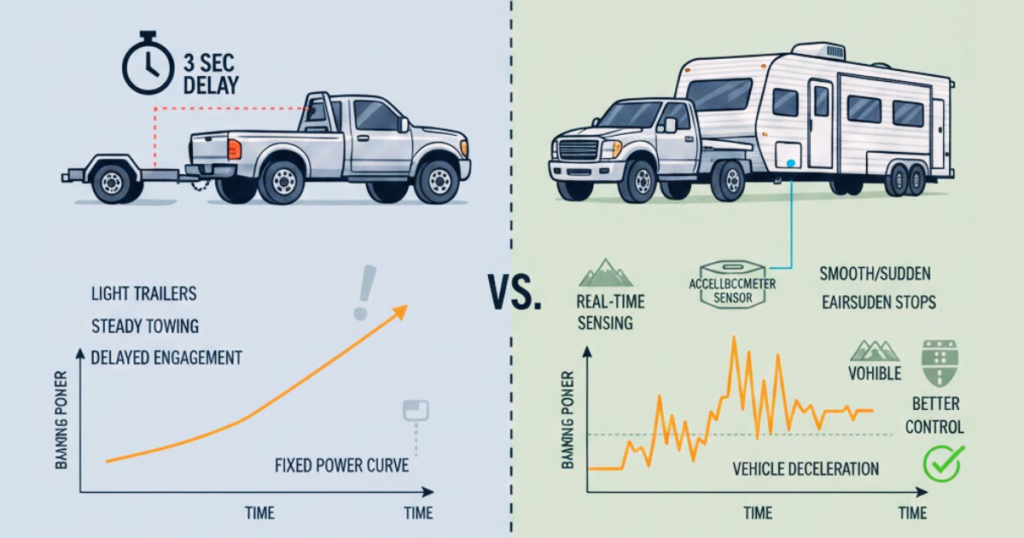
Time-based brake controllers apply the trailer brakes after a short delay. its typically around 3 seconds.
When you press the brake pedal, the power slowly increases over a set time. You can adjust the delay to make braking predictable. This braking force is not proportional to how hard the tow vehicle is stopping. this type of brake only work best for light trailers or steady towing.
Motion-Based (Proportional) Brake Output Logic
Motion-based, or proportional are work based on the sensor controller that react in real-time, providing smooth and efficient/sudden stops. This system is using the using an accelerometer or inertia sensor. That Sensors in the controller detect the vehicle’s movement and send the right braking power to the trailer.
Motion-Based Brake controller give you better control, especially on hills and highways.
Trailers That Use Brake Controllers
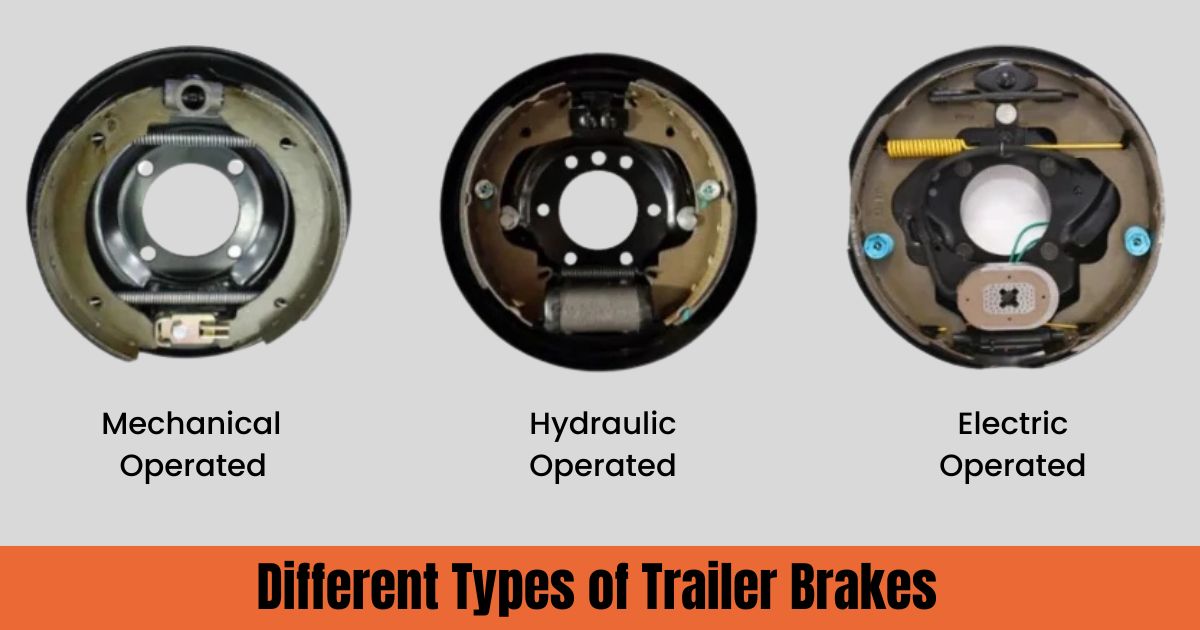
Brake controllers are only needed for trailers that have electric brakes. These brakes get power from the tow vehicle and can be controlled using the controller.
Heavier trailers usually need stronger braking, and trailers with multiple axles almost always require a controller to stop safely.
Common types of trailers that use brake controllers include enclosed trailers, dump trailers, flat deck and tilt deck trailers, car haulers, and equipment trailers.
When a Brake Controller Is Required by Law
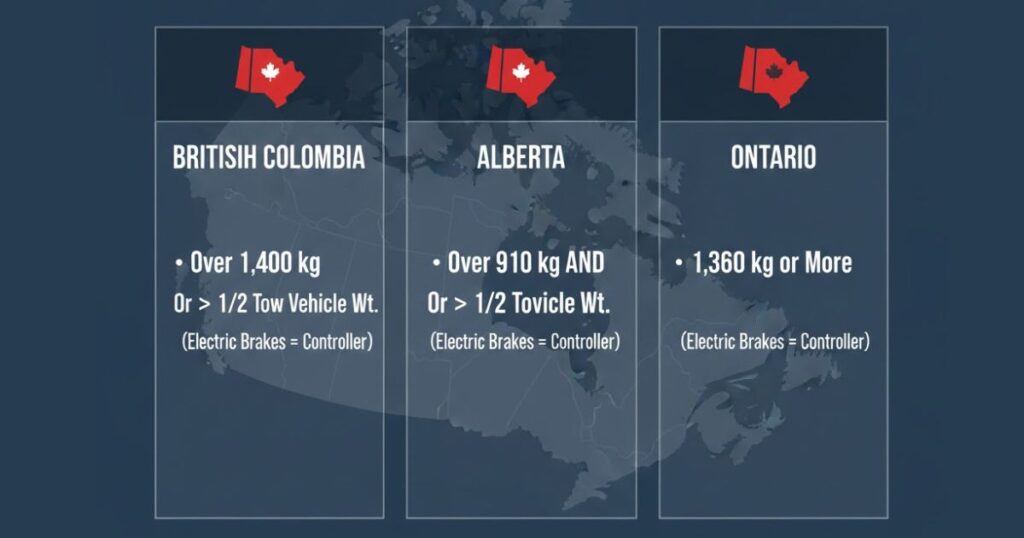
Brake controllers are needed for trailers with electric brakes, and rules vary by province.
In British Columbia, trailers over 1,400 kg (~3,080 lb), or trailers under 1,400 kg that weigh more than half the towing vehicle, must have brakes on each axle. Trailers over 2,800 kg (~6,160 lb) must have brakes that the driver can operate from the vehicle, which for electric brakes means a brake controller.
In Alberta, trailers over 910 kg (~2,000 lb) and more than half the towing vehicle’s weight require brakes, and if they are electric, a controller is needed to operate them.
In Ontario, trailers weighing 1,360 kg (~3,000 lb) or more must have brakes capable of stopping and holding the trailer, and electric brakes require a controller in the tow vehicle.
When you are towing, just be sure to know your state requirement.
The Final
By knowing how it works, the types available, and the trailers that need it, you can tow confidently and avoid accidents. Following your province’s laws, regularly testing your trailer brakes, and keeping the controller well-maintained will help ensure it works properly every time you hit the road.
Recent posts


Reach Us
Share
LinkedIn
X
Pinterest
Facebook