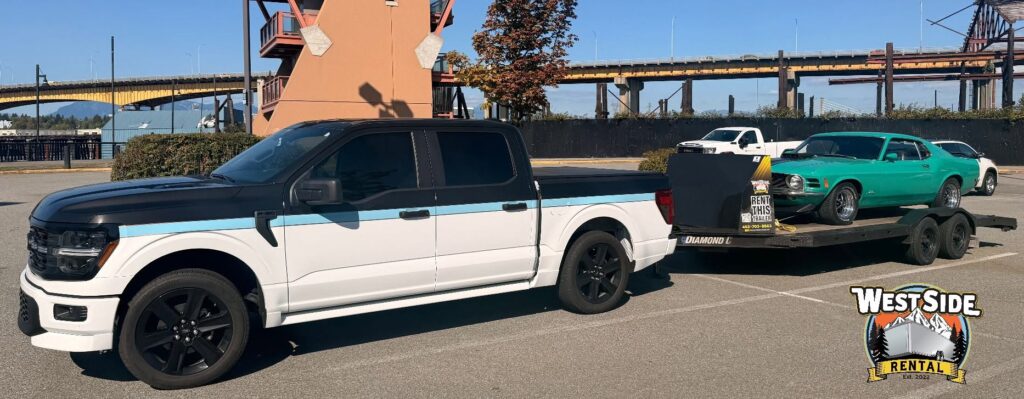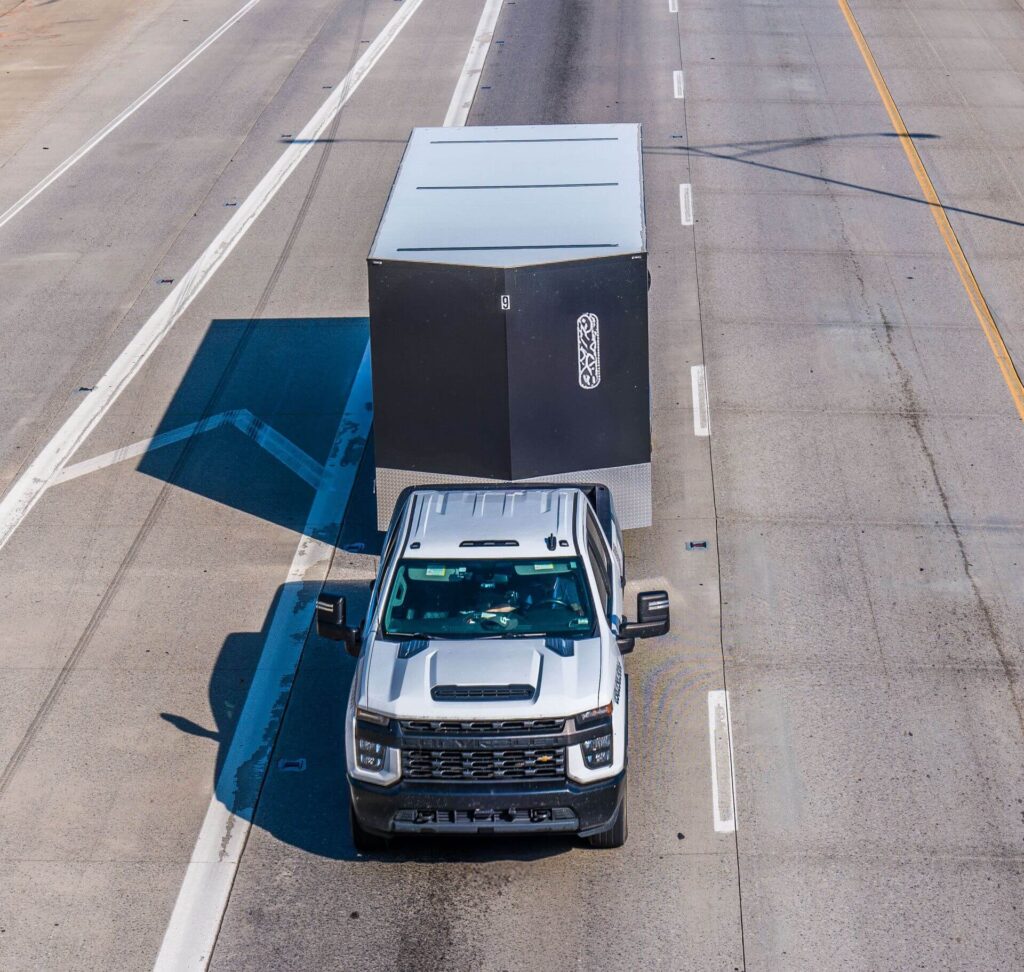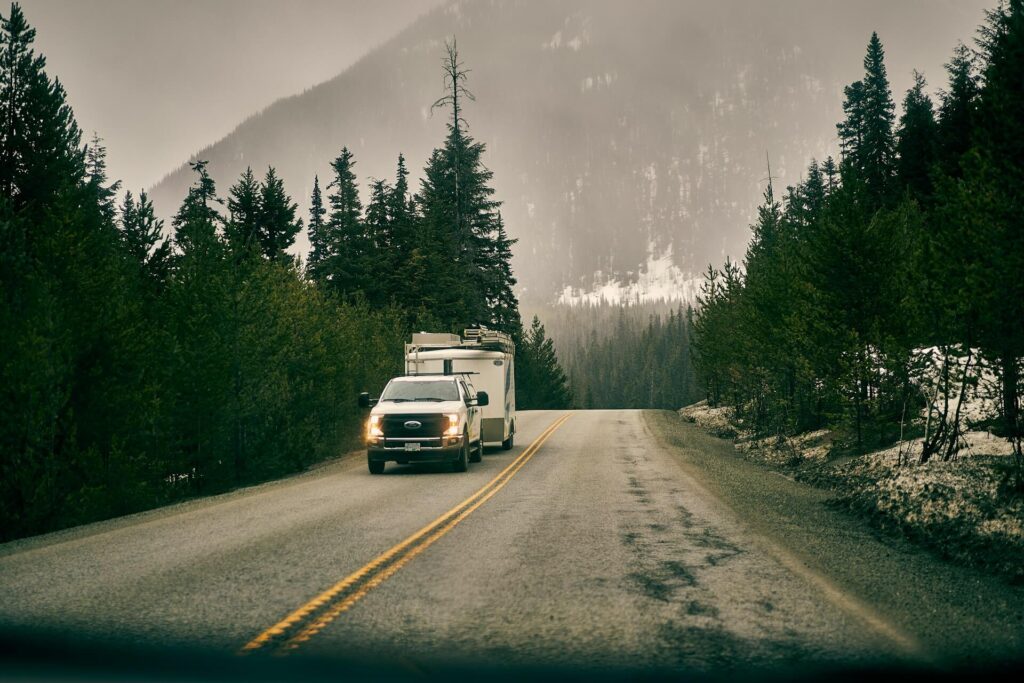





We know there must be a better option than the two axles. But this isn’t a “which is better” debate. It’s a “which one actually fits the job you’re doing tomorrow morning” decision. It’s all about the capacity that you are going to haul.
At Westside Rental, we’ve seen too many people guess wrong and either pay for capacity they never use or, worse, risk a load they shouldn’t have hitched. This guide breaks down the exact differences, the real-world pros and cons, and the plain-language logic that tells you which flatdeck to hook up and go.
Key Takeaways
- Choose tandem for heavy hauls, single axle for light, tight-space jobs
- Tandem axles handle heavier loads with far greater highway stability
- Always check payload (GVWR minus trailer weight), not GVWR alone
- A blown tire on a tandem is safer; single axles lose all support
- Tandems cost more and turn wider; single axles save money and space
Side-by-Side: Single Axle vs. Tandem Axle Flatdeck
| Factor | Single Axle Flatdeck | Tandem Axle Flatdeck |
|---|---|---|
|
Typical Payload Capacity |
2,500 to 5,000 lbs |
7,000 to 13,600 lbs |
|
Axle Configuration |
1 axle, 2 tires |
2 axles, 4 tires |
|
Highway Stability |
Moderate, sway risk at speed |
High, stable under load |
|
Blowout Safety |
Single point of failure |
Remaining 3 tires maintain control |
|
Maneuverability |
Easier in tight spaces |
Requires more room to turn |
|
Tow Vehicle Required |
Half-ton or light-duty in some cases |
3/4-ton or 1-ton pickup typical |
|
Electric Brakes |
Often not included |
Standard on both axles |
|
Best For |
Light loads, short hauls, tight access |
Heavy equipment, highway runs, Alberta job sites |
|
Rental Cost |
Lower |
Higher but justified for most real jobs |
So, What's the Real Difference Between a Single and Tandem Axle in Practice?
At the most basic level, the axle count is exactly what separates these two trailer types. But that one number changes nearly everything about how the trailer performs, what it can carry, and how safe it is to tow down the QE2 at 110 kilometres per hour.
Single Axle Flatdeck — What It Is and How It’s Built
A single axle flatdeck has one axle, typically with one wheel on each side. The suspension is simple, usually leaf springs or a torsion beam, and the frame is lighter-gauge steel.
On most trailer rental units in Alberta, a single axle is rated between 3,500 lbs and 7,000 lbs depending on the build. The trailer frame, deck planking, hitch, and tires all feed into the same axle, meaning all road forces, all load weight, and all cornering stress pass through one set of wheels.
Single axle flatdecks are typically shorter, lighter, and have a smaller footprint. These trailers are designed to be pulled by a wide range of vehicles, from mid-size SUVs to half-ton trucks. Because there are only two tires, they also sit slightly lower to the ground than tandem models.
Tandem Axle Flatdeck: What It Is and How It Is Built
A tandem axle flatdeck runs two axles close together with four wheels on the ground. The suspension uses an equalizer between the leaf springs so that all four tires stay planted even when you hit uneven ground or a pothole.
On a commercial-grade rental flatdeck in Alberta, each axle is commonly rated at 5,200 lbs to 7,000 lbs, which means a tandem setup carries a combined axle rating of 10,400 lbs to 14,000 lbs.
These trailers are more suitable for heavy hauling, and these axles help to distribute weight over a larger area, reduce the force on any single tire, and add structural rigidity to the trailer frame under load. This commonly uses electric brakes on both axles, which helps them stop the trailer suddenly & smoothly.
The Critical Number: Payload vs. GVWR
Many people mistakenly treat GVWR as payload capacity, causing widespread confusion about what a trailer can actually carry.
Gross Vehicle Weight Rating (GVWR) is the maximum total weight the trailer is certified to handle. That total includes the trailer itself. Once you subtract the empty trailer weight (also called curb weight or dry weight), what is left over is your actual payload, the weight your cargo can legally and safely be.
Forget about this; you need one number: what can I actually put on the deck? That is payload capacity.
The Payload Formula:
GVWR – Trailer Empty Weight (Curb Weight) = Available Payload
Example: A tandem axle flatdeck with a GVWR of 9,890 lbs that weighs 2,700 lbs empty
leaves you 7,190 lbs of usable payload capacity.
Example: A single axle flatdeck with a GVWR of 7,000 lbs that weighs 2,200 lbs empty
leaves you 4,800 lbs of usable payload.
Never load to the GVWR itself. That number already includes the trailer weight.
Need a Trailer This Week?
Book your flatdeck trailer today and get free delivery on 7+ day rentals across Alberta
Advantages of a Tandem Axle Flatdeck Trailer
Tandem axle flatdecks are the standard choice for serious hauling, specially like the Alberta weather. Here is what they actually do better.
Load Distribution and Heavy Equipment Capability
Four tires on the ground spread the load’s footprint. The hitch weight is less punishing because the trailer carries more of the mass.
That means you can haul a skid steer, a compact excavator, a car, or a full pallet of concrete bags without pushing your tow vehicle’s rear axle past its limit.
A standard tandem flatdeck in the Alberta rental market carries between 7,000 and 13,600 lbs of usable payload. A single axle flatdeck typically caps at 4,000 to 5,000 lbs of real-world payload. If your load is on the heavier side of what a single axle can theoretically carry, a tandem is not just preferred, it is the safer call.
Stability at Highway Speed
Single axle trailers dance. Tandem trailers track. Running down Highway 2 through Airdrie or heading north on the QE2 toward Red Deer with a loaded flatdeck, trailer sway is one of the most dangerous things that can happen. Sway happens when the rear of the trailer starts to oscillate side to side, and it amplifies quickly, especially in crosswind conditions or when a large truck passes you.
The two-axle design resists sway from wind gusts, passing semi-trucks, and sudden steering corrections. Because the load is distributed more evenly, the trailer’s centre of gravity stays lower and more balanced.
The Safety Buffer: How Tandem Axles Handle a Tire Failure
This is the advantage that converts the skeptics. Blow a tire on a single axle flatdeck at highway speed, and you lose all support on that side instantly – the trailer can swing hard, jackknife, or flip before you have time to react.
On a tandem axle flatdeck, a blowout on one tire leaves three other tires carrying the load. The trailer remains stable enough to slow down and pull off safely. You are not going to drive 60 kilometres to a service station, but you can reach a safe stopping point without losing control of the vehicle and trailer.
In Alberta winters, when roads between Calgary and Cochrane or down Highway 22 can be icy and unpredictable, that safety margin is significant.
Disadvantages of a Tandem Axle Flatdeck Trailer
Tandem axle trailers are not the right call in every situation. Here are the legitimate drawbacks.
Higher Cost to Rent and Own
Rental rates for tandem trailers are higher because the equipment is more expensive to buy, maintain, and insure. Your tow vehicle will burn noticeably more fuel pulling the extra weight and rolling resistance. If your actual load is light and you are just moving a lawnmower, a set of doors, or a couple of ATVs, you are paying for capacity you do not need. A single axle rental would handle the job for less.
Turning Radius and Maneuverability on Tight Sites
A tandem flatdeck turns like a bus compared to a single axle. Backing into a narrow acreage gate, a downtown Calgary lot, or a tight construction site is genuinely harder with this setup.
The rear axles do not pivot, so as you turn, the inside wheels scrub against the pavement rather than following the curve. Drivers learn to compensate over time, but a single axle flatdeck stays far more forgiving for repeated tight reversals.
Overkill for Light, Frequent Loads
If you’re hauling a couple of plywood sheets, a riding mower, or some yard waste, a tandem trailer just punishes you.
The extra weight bounces your unloaded truck around, the fuel bill climbs, and you’re dragging capacity you will never touch. Renting a tandem for a 1,000 lb load is like ordering a semi-truck to deliver a pizza. It works, but you’ll pay for it in every way.
Advantages of a Single Axle Flatdeck Trailer
Single axle flatdecks have a real place in the market. Here is what they genuinely do well.
Easier to Maneuver in Tight Spaces
A single axle has one pivot point, so it tracks more predictably behind your truck. First-time trailer drivers find it easier to control. Narrow rural driveways, machine yards with tight equipment spacing, or residential streets all favour a single axle. The shorter length and lighter footprint give it a tighter turning radius and quicker response to steering input.
Lower Cost for Light-Duty Work
The rental rate is lower. Your vehicle uses less fuel. You don’t need a weight-distribution hitch or a heavy-duty truck to pull it. For small contractors, weekend DIYers, and anyone moving lighter materials, the savings on a single axle rental go straight to the bottom line.
Simpler Tow Vehicle Requirements
Single axle flatdecks can sometimes be pulled by vehicles that cannot handle a loaded tandem. A half-ton truck or a 3/4-ton SUV can often manage a single axle under a light load. Tandem flatdecks near 14,000 lbs GVWR typically need a 3/4-ton or 1-ton pickup with a brake controller. If your tow vehicle is not heavy-duty, a single axle may fit what you already drive.
Disadvantages of a Single Axle Flatdeck Trailer
These are the real limitations of a single axle flatdeck. They are not minor and in certain situations they matter a lot.
Hard Weight Limits and Payload Risk
Single axle flatdecks are rated between 3,500 and 7,000 lbs per axle, leaving 2,500 to 5,000 lbs of usable payload after the trailer’s own weight. That covers an ATV or a small piece of equipment, but not a compact excavator or a heavy steel delivery. People often underestimate combined cargo weight, and overloading a single axle risks axle, bearing, and tire failure on the road. The numbers on the rating plate are the law of physics, and they don’t negotiate.
Reduced Highway Stability
Sway is the enemy for a single-axle trailer. On Alberta highways running 110 km/h with unpredictable mountain crosswinds, sway on a single axle can escalate fast. Keeping 60 percent of the load weight in the front half helps, but the physics still favour a tandem’s added stability.
Single Point of Failure During a Blowout
As noted above, one tire equals one chance. If one tire fails on a single axle flatdeck, there is no remaining support left on that side of the trailer. The rim hits pavement, the load shifts, and the tow vehicle feels a sudden yaw force through the hitch.
At highway speed, a blowout on a single axle flatdeck can cause the trailer to jackknife or flip, depending on the load. There is no redundancy. You cannot safely coast to a stop the way you can on a tandem setup. If you are hauling anything heavy and traveling any significant distance on Alberta highways, this is the reality of choosing single axle.
When a Single Axle Flatdeck Makes Sense
If you can unload the heaviest piece by hand or with a small dolly, and you’re driving 20 minutes on 45-mph roads, the single axle flatdeck is the tool for the job.
Here are some checkpoints for when to rent a single axle for your job fits inside these lines:
- Your load is comfortably under 4,000 lbs and you have confirmed the actual weights, not estimated them.
- You are making short hauls within a city or municipality, not running highway distances at speed.
- The job requires frequent tight reversals or access through narrow gates and laneways where a longer tandem trailer is impractical.
- The tow vehicle is a half-ton or light-duty pickup that cannot safely handle the tongue weight or GVWR of a larger tandem flatdeck.
- You are moving something like a small ATV, light landscaping equipment, or a few sheets of plywood where a tandem flatdeck would be genuine overkill.
Budget is tight, and the load genuinely fits within single axle capacity with margin to spare.
If you are in any doubt about the load, call us at Westside Rental; our support team will always help you with the right trailer.
When a Tandem Axle Flatdeck Makes Sense
Move up to the tandem when the job says “heavy” and the road says “fast.”
Your load is over 4,000 lbs, or you are not certain of the exact weight and want a safety margin.
- You are hauling heavy equipment including mini excavators, skid steers, compact track loaders, large ATVs, or full-size trucks.
- You will be driving any distance on Alberta highways at speeds above 80 km/h, where trailer sway and blowout risk are significant factors.
- You need electric brakes on the trailer for controlled stopping with a heavy load. Most tandem flatdecks in the Alberta rental market are equipped with brakes on both axles.
- You are going to be hauling in winter conditions on rural roads, acreage driveways, or gravel pulls where road surfaces are unpredictable.
- You need to load wide, heavy, or unevenly distributed cargo where a single axle’s limited payload and lower stability would create risk.
- The job involves a longer piece of equipment that needs a longer deck, and longer flatdeck trailers are almost always tandem by design.
Contractors moving equipment between job sites anywhere in the Calgary region, including Okotoks, Airdrie, Cochrane, Chestermere, and High River, are almost always better served by a tandem axle flatdeck for the combination of payload capacity, stability, and braking performance.
Which One Should You Rent?
Go with the single axle when the heaviest thing you’re hauling would fit in the bed of a half-ton pickup and you could unload it by hand. It costs less, tows easier, and won’t fight you in a tight driveway.
A tandem is your answer when a forklift is loading your trailer. Forklifts don’t handle featherweight materials; if a machine is doing the lifting, the load is already past the single axle’s comfort zone.
Not sure which size fits your job? Call ahead and tell us what you’re hauling. The weight and load dimensions will determine the right trailer in about 60 seconds.
faq
Frequently Asked Questions
How much weight can a tandem axle flatdeck trailer carry?
A tandem axle flatdeck typically carries between 7,000 and 13,600 lbs of usable payload, depending on the trailer size and axle rating. Westside Rental's tandem units run dual 6,000 to 7,000 lb axles depending on the model.
How much weight can a single axle flatdeck trailer carry?
A single axle flatdeck usually caps out at 2,500 to 5,000 lbs of real-world payload after accounting for the trailer's own weight, with axles rated between 3,500 and 7,000 lbs.
What's the difference between GVWR and payload?
GVWR is the trailer's total certified weight including the trailer itself. Payload is what's left after subtracting the trailer's empty weight from the GVWR. Never load to the GVWR number directly, since it already includes the trailer.
Is a tandem axle trailer safer than a single axle on the highway?
Yes. Tandem axles resist sway better and provide redundancy if a tire fails. A blowout on a tandem leaves three tires still supporting the load, while a single axle blowout removes all support on that side instantly.
Can a half-ton truck tow a tandem axle flatdeck?
It depends on the load. Lighter tandem setups can sometimes be towed by a half-ton, but most tandem flatdecks near 14,000 lbs GVWR require a 3/4-ton or 1-ton pickup with a brake controller.
When should I rent a single axle instead of a tandem?
A single axle makes sense for loads comfortably under 4,000 lbs, short in-city hauls, and jobs requiring frequent tight reversals through narrow gates or driveways.
Do tandem axle flatdecks have brakes on both axles?
Most tandem flatdeck trailers in the Alberta rental market come with electric brakes on both axles for controlled stopping under heavier loads.
Why does a tandem axle trailer turn wider than a single axle?
The rear axles on a tandem don't pivot independently, so the inside wheels scrub against pavement during tight turns. This makes tandem trailers harder to maneuver in narrow spaces compared to a single axle.
What size flatdeck trailer does Westside Rental offer?
Westside Rental offers 18ft and 20ft flatdecks with dual 6,000 lb axles, a 22ft tilt deck with dual 7,000 lb axles, and a 24ft flatdeck with dual 7,000 lb axles. All Westside flatdeck units are tandem axle.
Should I call before booking a flatdeck trailer?
Yes, especially if you're unsure of your load weight or dimensions. Westside Rental's team can confirm the right trailer size based on what you're hauling in about a minute on the phone.