




It’s a question that surfaces regularly in the r/Calgary subreddit when someone is staring down a garage reno or a landscaping overhaul: “I’m renting a dump trailer for the weekend to get rid of drywall, old tile, and some concrete. What can I actually put in there? Is there a weight limit I have to worry about, and will they refuse it if I toss in a couple of old mattresses too?”
Those are exactly the right things to be asking—because the rules for a towable dump trailer are far tighter than what you’d face with a stationary curbside bin. Load the wrong item, and your pickup will be refused. Ignore weight limits, and you’re not only looking at surcharges, but a trailer that could be dangerous (and illegal) to pull down Deerfoot Trail.
This guide walks you through every material category, weight limit, and local Calgary bylaw so you can load confidently and avoid an expensive lesson.
Key Takeaways
- Match the trailer size and payload to the type of material you’re hauling
- Heavy materials reach weight limits before the trailer is full, so load by weight, not volume.
- Keep about 60% of the load in front of the axles and maintain 10 to 15% tongue weight for safe towing.
- Stay within your trailer’s payload rating and your tow vehicle’s towing capacity to ensure safe, legal transport.
- Secure and tarp every load, and inspect the hitch, safety chains, lights, and brake controller before every trip.
- Follow Calgary’s disposal rules and avoid prohibited items such as hazardous waste, batteries, electronics, and propane tanks.
What Is a Dump Trailer, Exactly
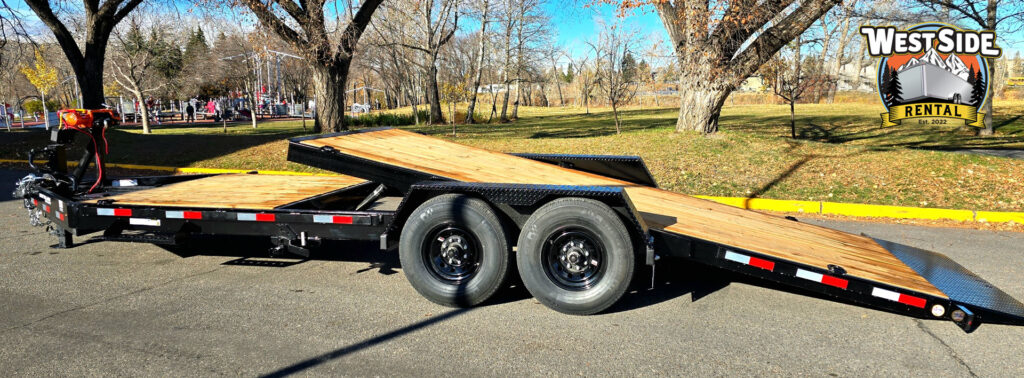
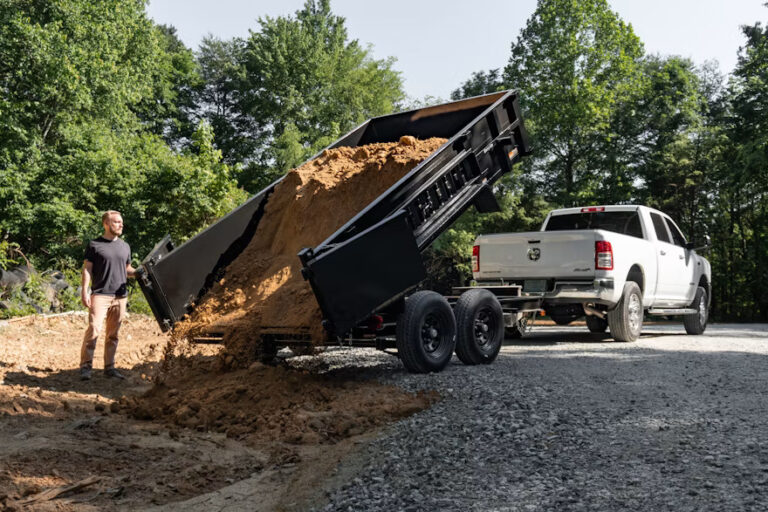
A dump trailer is a towable, open-top trailer built with a hydraulic hoist system that tilts the entire bed upward to slide out to unload heavy materials like gravel, dirt, and debris. This design lets you load from ground level and then empty the trailer cleanly at a landfill, recycling depot, or jobsite.
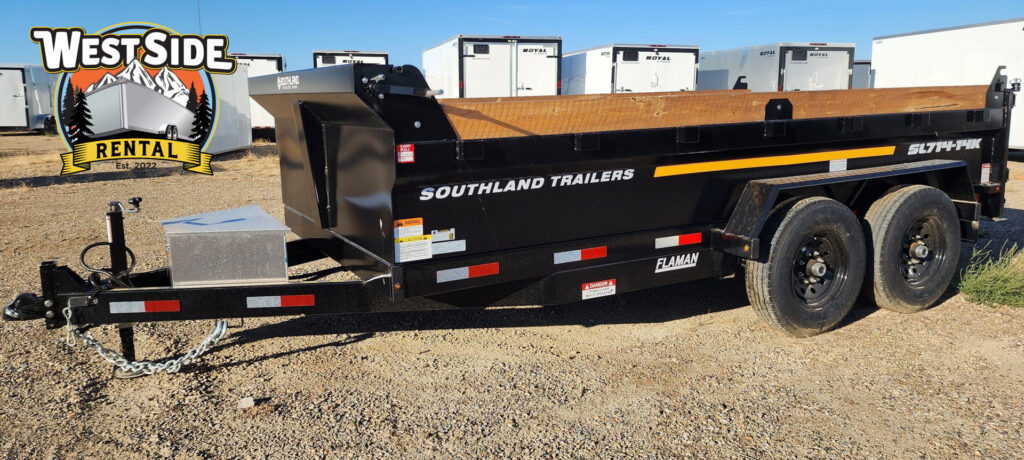
A dump trailer is a towable, open-top trailer built with a hydraulic hoist system that tilts the entire bed upward to slide out to unload heavy materials like gravel, dirt, and debris. This design lets you load from ground level and then empty the trailer cleanly at a landfill, recycling depot, or jobsite.
In many cases, the rental company delivers it and picks it up. If you have a capable truck, you hook it to your own vehicle, load it, drive it to the landfill yourself, and use a hydraulic lift to tip the bed and dump the load.
That self-haul setup is why a dump trailer needs its own rulebook. Fleet sizes typically run from about 3 cubic yards on the small end up to around 10 cubic yards on the largest consumer rentals. Trailers also come in single-axle and tandem-axle builds.
Single-axle units suit light, occasional jobs, while tandem-axle trailers, with two axles sharing the load, are built for the heavier, more frequent hauling that renovation and landscaping work actually involves.
💡 Westside’s entire dump trailer fleet is tandem-axle for this reason, running from a 10 ft model rated for 8,775 lbs of payload up to a 14 ft model rated for 12,000 lbs, all with electric brakes and a roll-up tarp included
What You Can Put in a Dump Trailer
Household junk and old furniture
Couches, mattresses, and general clutter are all fine, which makes a dump trailer a common choice for a Calgary move or a garage clear-out, since you’re hauling straight to the landfill rather than setting it out for curbside pickup.
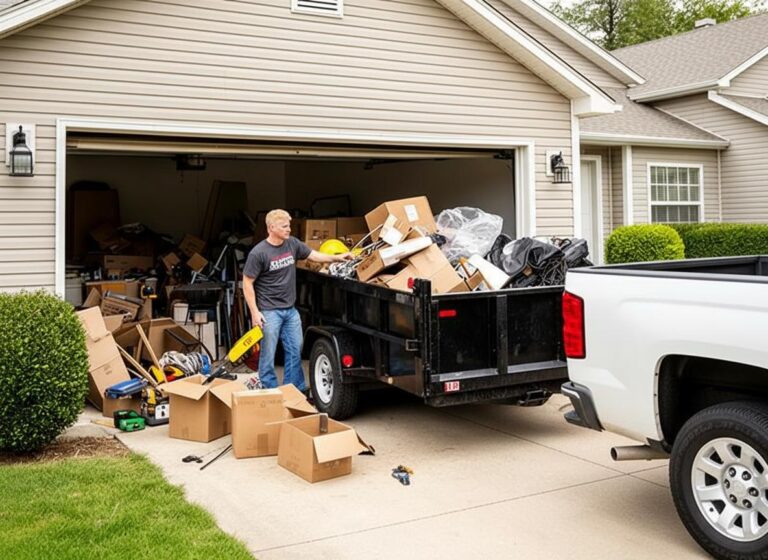
Construction and demo debris
Wood, drywall, tile, concrete chunks, and roofing shingles are all standard loads, whether it’s a kitchen reno in Calgary or a deck rebuild out in Airdrie or Okotoks.
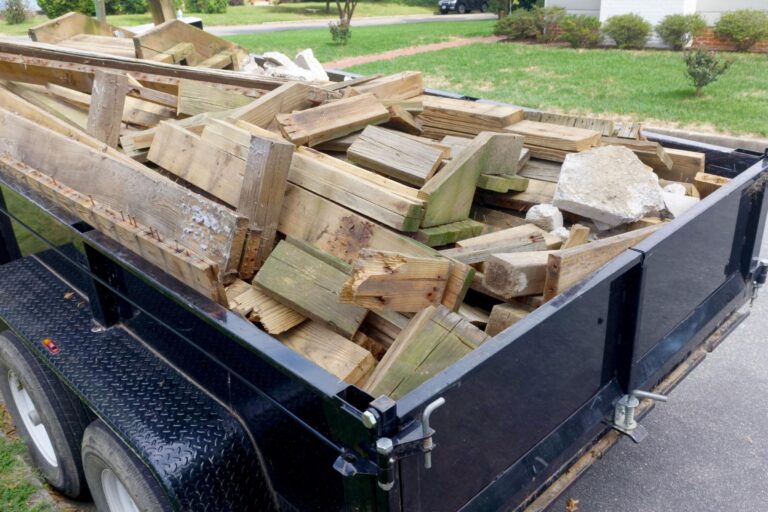
Yard waste
Branches, leaves, and sod are fine for a dump trailer. For smaller ongoing yard waste, Calgary’s Green Cart composting program is the better option, but a trailer load makes more sense for a full-acreage cleanup out in Cochrane or Chestermere, or any Calgary yard project well beyond what a cart can hold.
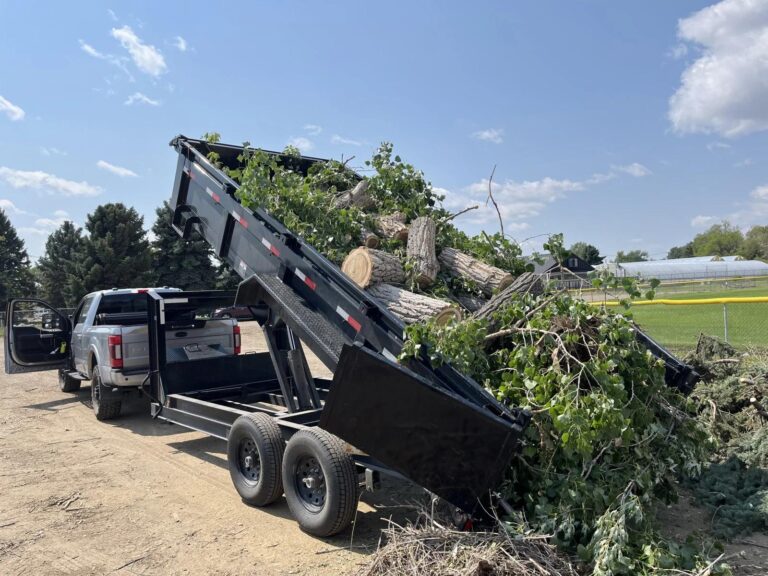
Metal and appliances
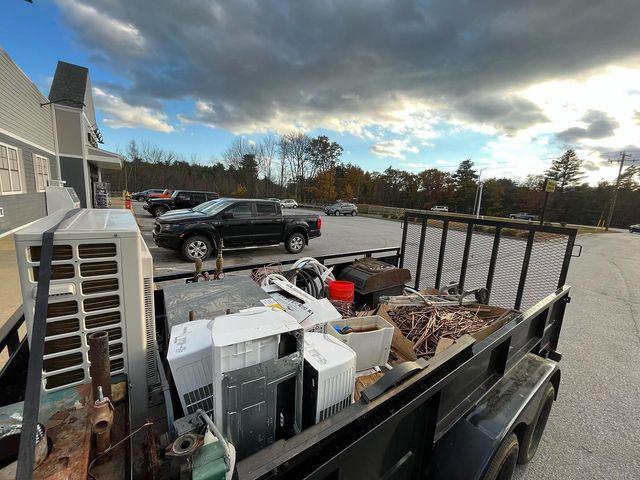
Scrap metal and appliances are fine, as long as the appliance doesn’t contain refrigerant. Fridges, freezers, and AC units need to be professionally drained first, and clean scrap is usually worth more at a Calgary scrap yard than it costs to landfill.
Clean fill dirt and soil
Dirt is a common load, but only in limited quantities relative to weight, not volume. More on that below, since this is where most people misjudge what actually fits.
What You Can't Put in a Dump Trailer
Hazardous chemicals
Electronics
Tires
Batteries
Car batteries and lithium batteries both carry serious leaking and fire risk and count as hazardous waste under Alberta’s Environment Protection and Enhancement Act.
Refrigerant appliances
Same rule as above: fridges, freezers, and AC units need the refrigerant professionally removed before disposal.
Medical waste
Asbestos and treated wood
Older shingles, flooring, and cement products can contain asbestos, and lumber treated with chemical preservatives falls under the same strict handling rules. If you’re demoing an older Calgary home, this is worth checking before anything goes in the trailer.
Propane tanks and compressed gas cylinders
Liquids
Weight Limits, and Why They Matter More for a Trailer
A dump trailer has to actually move down the highway behind your vehicle, which means two separate limits are in play at once, not one.
1. The trailer's rated capacity (GVWR and payload)
A typical 6×12 dump trailer in Calgary has a Gross Vehicle Weight Rating of 9,990 lbs and weighs about 3,500 lbs empty. That leaves a payload of roughly 6,500 lbs. But that payload must include everything from the load to the weight of any tie-downs, and must not exceed the trailer’s axle ratings. Go over that and you’re not just risking a fine, you’re towing something the trailer wasn’t built to carry.
2. Tongue weight
This is separate from the trailer’s rating and just as important. 10–15% of the total trailer weight must sit on the hitch. Too little tongue weight and you get deadly trailer sway; too much and you overload the truck’s rear axle. Even with a half-ton truck, you can run out of payload before you run out of trailer capacity.
3. Vehicle towing capacity
Your truck has a maximum towing capacity you must not exceed. If you’re driving an SUV, mid-size pickup, or anything without a factory tow package, double-check before you hook up. Exceeding the manufacturer’s limit voids insurance and can lead to fines under Alberta’s Traffic Safety Act.
4. Volume and weight are two different problems
Heavy, dense material like dirt, gravel, or concrete hits the weight limit long before it fills the box. Bulky, light material like furniture or branches does the opposite; it fills the box long before it gets close to the weight limit. A quick comparison makes this obvious.
| Material | Weight per cubic yard, dry | Weight per cubic yard, wet |
|---|---|---|
|
Topsoil / fill dirt |
2,000 to 2,700 lbs |
2,800 to 3,375 lbs |
|
Gravel / crushed stone |
2,565 to 2,835 lbs |
Up to 3,375 lbs |
|
Concrete rubble |
3,900 to 4,050 lbs |
Up to 4,050+ lbs |
|
Clay |
about 2,300 lbs |
about 2,970 lbs |
|
Branches/yard waste |
400 to 800 lbs |
up to 1,500 lbs |
A 10 ft trailer has room for 3 to 4 cubic yards, but its payload is 8,775 lbs. Three yards of wet topsoil alone can push close to 10,000 lbs, over the limit before the box looks even half full. For dense material, load to weight, not to the top rail.
Need a Trailer for Your Move?
Choose the right enclosed trailer size and get expert help from our team.
Loading and Towing Safety
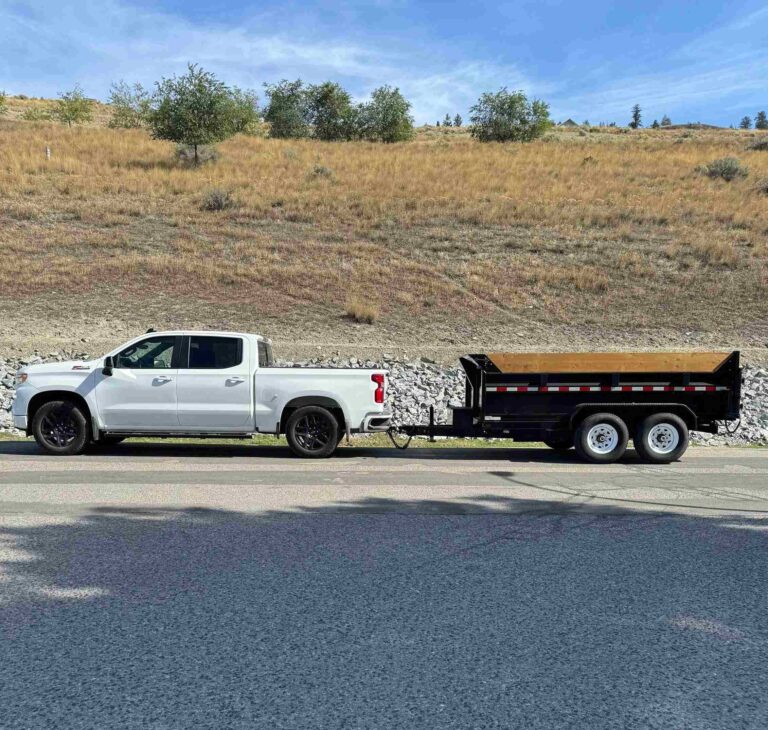
Once you know what’s allowed, how you load it determines whether you make it to the landfill without incident.
Follow the common rule of towing: 60% of the weight in the front half (ahead of the axles) and the other 40% of the load in the rear half (behind the axles). For most bumper-pull trailers, you want roughly 10–15% of the total loaded trailer weight sitting on the hitch. If too little weight is up front, the trailer can swing wildly; too much, and you’ll lift the tow vehicle’s front axle and lose steering control.
Before you hit the road, keep these essential safety practices in mind:
Tie down everything
Stay under the fill line
Nobody rides in the bed
Once the hydraulic lift starts tipping, there’s no reason for anyone to be in or near the box.
Tarping is a legal requirement, not a courtesy
In Alberta, this isn’t optional once you’re carrying loose material. The City of Calgary’s Waste Bylaw requires everything hauled to the landfill to be covered or secured, with fines up to $1,000 for skipping it. Separately, Alberta’s Traffic Safety Act fines an unsecured load around $345, and failing to cover loose material specifically, like gravel or dirt, around $500. Both can apply on the same trip.
What You Need to Rent a Dump Trailer
Every trailer rental company sets its own requirements for who can rent and how. Some ask for extra paperwork, some run credit checks, some make you wait a day or two before pickup. Most of it comes down to the same two things: confirming you can legally tow, and covering the company if something comes back damaged or late.
At Westside Rental, we keep the booking process as quick and straightforward as we can. Here’s exactly what you’ll need to bring before you drive off with a dump trailer:
- A valid driver’s license.
- Up-to-date auto insurance on your towing vehicle (the truck doing the pulling, not the trailer).
- A $300 refundable security deposit, returned once the trailer comes back in the condition it left in.
- A credit card for payment.
- A signed rental agreement covering the load and towing rules.
That’s the whole process. We just want what’s required to make sure you can legally tow the trailer home and bring it back without any unnecessary hoops to jump through.
Final Thought
Renting a dump trailer can make quick work of a Calgary reno, move, or yard cleanup, but only when it’s loaded right. Know what’s banned before you start tossing things in, watch weight rather than just fill height, tie down and tarp the load, and stay within both the trailer’s payload and your vehicle’s towing capacity.
When something’s borderline, a quick call to 311 costs far less than a rejected load at the gate or a hazardous waste surcharge. Get those basics right, and the trip to the landfill becomes the easiest part of the whole project. At Westside Rental, our team is happy to help you pick the right trailer size and answer any loading questions before you book.
faq
Frequently Asked Questions
Can I put a mattress in a dump trailer?
Yes. Mattresses are fine in a dump trailer since you're hauling straight to the landfill yourself, unlike curbside pickup, where Calgary won't take them as garbage.
Can I mix recyclables in with everything else?
You can, but it's not smart. Cardboard, metal, and clean plastic go in Calgary's blue cart for free, so tossing them in the trailer just eats your weight limit.
Do I need a permit to keep a dump trailer on my property?
No permit is needed to keep a rental dump trailer on your own driveway or yard for the length of your rental. It just can't sit detached on a public street.
What's the actual difference between a dump trailer and a dumpster rental?
A dumpster is a bin a company drops off and picks up for you. A dump trailer is towable, so in Calgary you load it, drive it yourself, and dump it at the landfill.