




Renting a trailer is one of the easiest ways to move a load without owning one. Whether you’re moving a household across Calgary, hauling gear to the mountains or picking up gravel for the yard, you get the right trailer for the day and hand it back when you’re done.
The catch is that a rental only goes smoothly when your vehicle, your load and the trailer all line up.
The most common mistakes when renting a trailer are choosing the wrong size, ignoring your towing capacity, using the wrong hitch or wiring, skipping the inspection, loading badly, overloading, assuming you’re insured, skipping the agreement, booking late, underestimating the cost, and missing the return rules. Almost all of them are easy to avoid if you sort them out before pickup day.
Key Takeway
- Match the trailer size to your cargo dimensions and the type of load you are hauling
- Check your vehicle’s towing capacity, payload, tongue weight, hitch, and wiring before pickup
- Inspect the trailer for tires, lights, coupler, brakes, chains, and existing damage
- Load about 60% of the cargo weight ahead of the axle and secure everything with properly rated tie downs
- Stay within the trailer’s GVWR, payload, axle, and tire limits to avoid damage and unsafe towing
- Read the rental agreement, book early, confirm the total cost, and understand the return requirements
Mistake 1: Choosing the wrong trailer size
The most common size mistake is guessing. People picture their load, pick a trailer that sounds about right, and only find out during loading that it doesn’t fit.
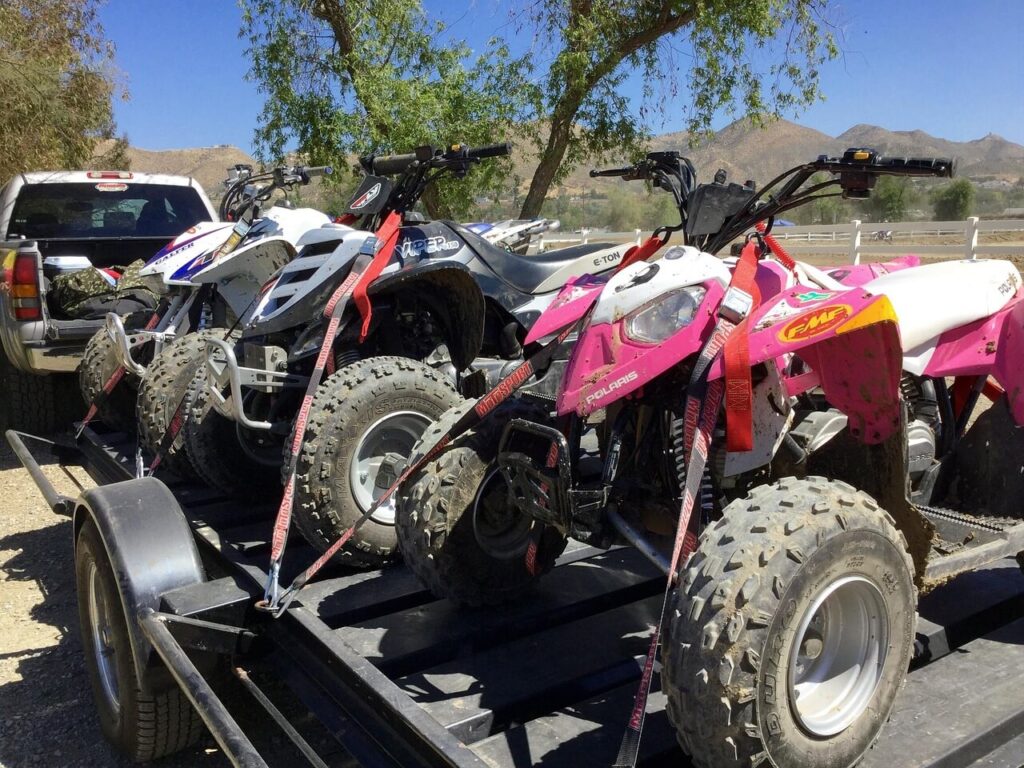
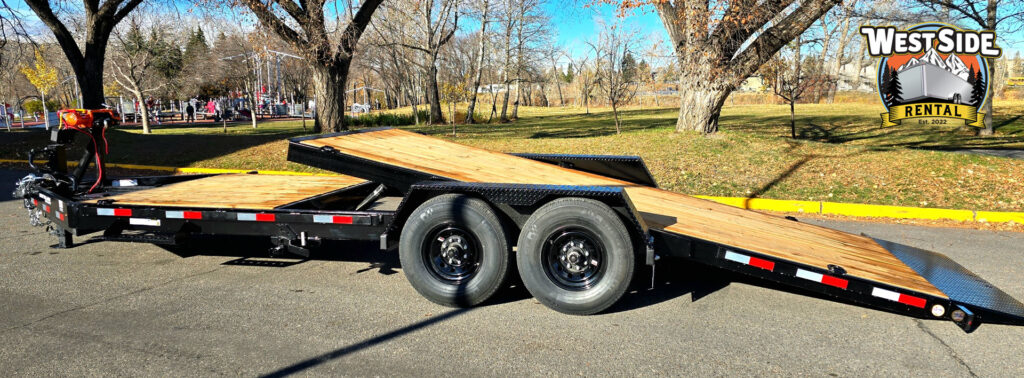
Understanding cargo footprint is key. Measure what you’re hauling before you book. Consider trailer types: enclosed trailers protect goods from weather and theft, flatdecks handle oversized or awkward loads, and tilt decks make loading wheeled equipment a breeze. Each serves a different purpose.
Getting the trailer dimensions right helps:
- Ensure your cargo fits securely without improvisation
- Match the trailer to your actual needs, not guesswork
- Avoid upgrading on rental day when options may be limited
- Prevent damage to your goods from improper fit
Mistake 2: Not matching your vehicle's towing capacity
Just because your SUV has a hitch doesn’t mean it can tow anything on the lot. This mistake can fry your transmission, void your warranty, or worse can be cause a serious accident on the highway.
Your vehicle must be rated for the trailer and its load. Check the owner’s manual and door-jamb label for towing capacity, GVWR, GCWR, payload, and tongue weight. Gross trailer weight includes cargo, not just the empty trailer. Tongue weight should usually be 10 to 15 percent of that total. Stay within every rating. Exceeding one can strain brakes, suspension, cooling, and transmission, and it may void insurance or warranty coverage.
Verifying your tow ratings ensures:
- Your vehicle stays within its rated limits when the trailer is loaded
- Stable braking and steering on Alberta highways and mountain grades
- Less strain on your engine, transmission and brakes on every trip
- Room in your vehicle’s payload for passengers, gear and tongue weight
Mistake 3: Wrong hitch, ball, or wiring
A trailer can be the right size and weight and still be unusable if the connection doesn’t match. Start with the coupler on the trailer tongue, which has its ball size stamped on it. Most utility and standard enclosed trailers use a 2 in ball, while heavier trailers use 2-5/16 in. A 2 in ball will not lock into a 2-5/16 in coupler, and forcing it is unsafe. Your hitch receiver (usually 1-1/4 in or 2 in) and ball mount need to be rated for the load as well.
Wiring is the other common surprise. A 4-way connector runs lights only, while a 7-way adds power and the circuit for electric brakes. In Alberta, trailers at about 910 kg (2,000 lb) gross weight or more generally need their own brakes.
Ask the rental provider whether the brake uses this trailer, electric brakes or surge brake, and the wiring connector pin (4-way or 7-way). They will guide you through this.
Matching your connection hardware guarantees:
- A coupler that seats fully on the ball and latches shut securely
- Working lights and brake signals so other drivers can see you
- Trailer brakes that respond properly every time you slow down or stop
- No last-minute scramble for adapters or a hitch shop on pickup day
Mistake 4: Skipping the pre-rental inspection
It’s tempting to sign, hitch up, and go, especially when you’re on a schedule. But pickup is your only chance to catch problems before they become your responsibility. A proper walkaround takes about 10 minutes and should happen before the trailer is hitched to your vehicle.
Check tire pressure while the tires are cold, plus sidewalls, tread, and the spare, then look over the lights, coupler latch, jack, chains, brakes, and tie-down points. Photograph any existing damage and ask staff to note it on the paperwork. In winter, make sure latches and lights aren’t frozen or packed with ice. Once hitched, test the lights and brakes before you leave the lot.
Documenting the trailer's condition protects you from:
- Being charged for scratches and dents that were already there
- Towing away a trailer with worn tires, a faulty coupler or dead lights
- Disputes at return over who is responsible for existing damage
- Surprises on the highway that a 10-minute walkaround would catch
Ready to Rent the Right Trailer?
Choose a trailer that fits your load, vehicle, and towing setup. Westside Rental offers a range of enclosed and flatdeck trailers for hauling around Calgary and beyond.
Mistake 5: Loading and securing cargo incorrectly
Even the right trailer becomes dangerous if the load is poorly placed. Follow the 60/40 rule: put about 60% of the cargo weight ahead of the axle and 40% behind it, with heavy items low and centred. This keeps tongue weight in the range of roughly 10 to 15% of the total trailer weight. A tail-heavy load lightens the tongue and invites sway, which is worst in crosswinds and on downhill grades.
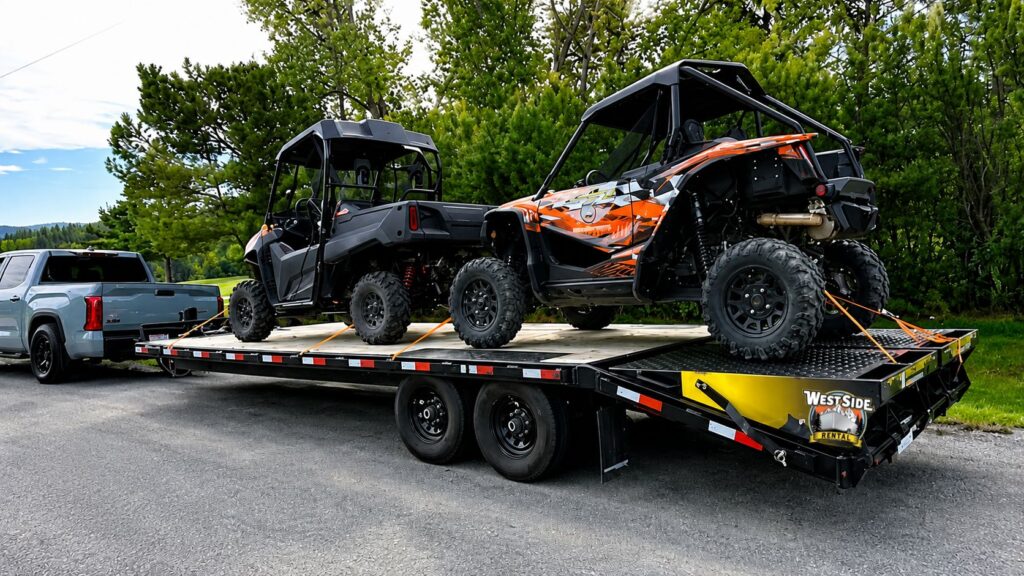
Securing the load matters just as much. Use straps or chains with a working load limit suited to the cargo, attach them to solid anchor points such as D-rings or E-track, and use wheel chocks when loading and unloading.
Ask the rental provider whether tie-downs come with the trailer, because you may need to bring your own. Recheck everything after the first few kilometres.
Using the 60/40 loading rule and proper tie-downs prevents:
- Dangerous trailer sway on windy stretches of Alberta highway
- Cargo that shifts, slides or tips during hard braking and sharp turns
- Too much or too little tongue weight pressing down on the hitch ball
- Loose items falling onto the road and into traffic behind you
Mistake 6: Overloading the trailer
Overloading means putting more weight in the trailer than it was built to carry. Every trailer has a compliance label listing its GVWR, the most it can weigh when fully loaded. Take the trailer’s empty weight (what it weighs with nothing in it) away from that number and you get the payload, which is the most cargo you can add.
Axle ratings and tire load ratings also limit capacity. Single axles carry less than tandem axles. Dense cargo like soil, gravel, or concrete gets heavy fast. Know the weight of what you plan to haul.
For example, a trailer rated at 1,360 kg (3,000 lb) that weighs 545 kg (1,200 lb) empty can carry about 815 kg (1,800 lb). It’s easy to forget the weight of tools and pallets, and wet soil or gravel in a dump trailer weighs more than it looks.
Respecting the trailer's payload limit avoids:
- Blown tires and overheated bearings on long highway hauls to the mountains
- Bent axles and damage to the trailer that you may be billed for
- Longer stopping distances and brakes that fade on downgrades
- Fines and added liability if you are stopped or in a collision
Mistake 7: Not reading the rental agreement
The rental agreement defines your responsibilities, damage liability, deposit, permitted use, mileage limits, driver eligibility, late fees, and cancellation policy. Read it before you sign.
Ask questions to the rental provider if anything is unclear. Confirm who can drive, where you can travel, and what happens if you return late or damage the trailer. A few minutes of reading can prevent disputes, surprise charges, and legal trouble later.
Reviewing the contract terms helps you avoid:
- Surprise charges for cleaning, late returns, or missing items
- Being held liable for damage that the agreement places on you
- Breaking terms on where you can travel or how you use the trailer
- Losing your deposit over a condition, timing, or paperwork issue
Plan Your Trailer Rental With Confidence
From choosing the right size to checking your tow setup and understanding the rental terms, a little preparation can make pickup day much easier.
Mistake 8: Booking too late
Trailer rentals are seasonal, and the popular sizes go first. Between spring and fall, weekends, month-end moves, long weekends such as the May long weekend and Labour Day, and construction season all push demand up. Winter brings its own rush for snowmobile and sled hauling. Waiting until the day before can leave you with the wrong size, a higher price or no trailer at all.
A late booking also creates a chain of other mistakes. Book as soon as your date is set, and confirm your hitch and wiring needs at the same time. Same-day rentals are sometimes possible, but you’ll have limited choice, so treat them as a backup, not a plan.
Reserving your trailer in advance secures:
- The trailer size you actually need, not whatever is left over
- Time to install a hitch or wiring harness well before pickup day
- Availability on long weekends and busy spring and summer days
- A calmer pickup with time to check the trailer and your setup
Mistake 9: Ignoring return requirements
Know the return window, condition rules, and equipment list. Because late returns can trigger extra fees, sometimes charged by the hour.
A post-rental inspection confirms condition and starts the deposit release. After-hours drop-off may be allowed, but follow the company’s process. Late returns can trigger fees. Return on time and in proper condition to protect your deposit and avoid extra charges.
Following the return protocol guarantees:
- A smooth drop-off with no disputes over the trailer’s condition
- Protection from late fees, since you know the exact return time
- A full deposit back, without cleaning or missing-item deductions
- A faster deposit release once the trailer has been checked in
Trailer Rental Checklist
Save or print this list and use it from your first phone call to the return.
Before Booking
- Weigh or measure your load and note the longest, widest item
- Find your tow rating in the owner’s manual or door-jamb label
- Confirm your hitch receiver size, ball size and wiring plug type
- Call your insurer about liability and physical damage coverage
- Reserve early and ask for an itemized quote that includes GST and fees
- Read the agreement for deposit, liability, late fee and return terms
At the Rental Lot
- Walk around the trailer and photograph any existing damage or wear
- Check tire pressure cold, plus sidewalls, tread, and the spare
- Test the coupler latch, jack, safety chains, and door latches
- Confirm the ball size stamped on the coupler matches your ball
- Ask whether straps and tie-downs come with the rental or cost extra
- Get the return time, location, and after-hours rules in writing
Before Hitting the Road
- Lock the coupler and pin the receiver so nothing can lift off
- Cross the safety chains under the tongue and attach them to your vehicle
- Plug in the wiring and test lights, signals and brake lights
- If the trailer has electric brakes, set the controller and test
- Load about 60% of the weight ahead of the axle and tie it down
- Adjust mirrors so you can see the full length of the trailer
- Stop to recheck straps and hitch within the first few kilometres
Returning the Trailer
- Return it by the agreed time, or call ahead if you will be late
- Empty it completely and sweep out dirt, debris, mud and snow
- Return every strap, chain, key and accessory that came with it
- Photograph the trailer’s condition and get a staff member’s sign-off
- Confirm when and how your security deposit will be released to you
Final Thought
If you’re renting a trailer for the first time, you won’t be able to keep track of everything at once, and that’s normal. Experience is what builds the routine, and it usually comes after the first rental.
The mistakes above are the ones renters run into most often, so they’re the best place to start: match the trailer to your load and vehicle, check the hitch and wiring, inspect before you leave, stay under the weight limits, confirm your insurance and agreement, book early, and know the full cost and return terms. Use the checklist, ask the rental team when you’re unsure, and you’ll be far more careful on your next haul.
faq
Frequently Asked Questions
How do I know if my vehicle can tow the trailer I want to rent?
Check the owner's manual or door-jamb label for towing capacity, GVWR, GCWR and payload. Add your cargo to the empty trailer weight to get the gross trailer weight, and keep tongue weight at roughly 10 to 15 percent of it. Stay under every rating, not just one.
Do I need trailer brakes or a special wiring connector?
In Alberta, trailers at about 910 kg (2,000 lb) gross weight or more generally need their own brakes. A 4-way connector runs lights only, while a 7-way also powers electric brakes, so you'll need a 7-way and a brake controller. Ask the rental team which your trailer uses.