




Over years of outfitting renters for cross-country moves, weekend track days, and heavy equipment hauls, we have seen perfectly capable vehicles pushed to their limits by the wrong trailer choice. The decision between a single and tandem axle comes down to how much weight you are carrying, how far you are going, and where you need to park it when you arrive.
Key Takeway
- A single axle trailer works well for one ATV, motorcycle, light equipment, or a small local move.
- A tandem axle trailer is better suited for two ATVs, a UTV, or other heavier loads.
- A tandem axle trailer provides more stability when hauling heavy cargo on highways and over longer distances.
- A single axle trailer is easier to turn, back up, and maneuver in tight driveways or confined spaces.
- Choose a tandem axle when your cargo is heavier or your trip involves extended highway driving.
- Choose based on your cargo, trip distance, tow vehicle, and available maneuvering space rather than rental price alone.
What's the Difference Between a Single Axle and Tandem Axle Enclosed Trailer
Single axle enclosed trailer
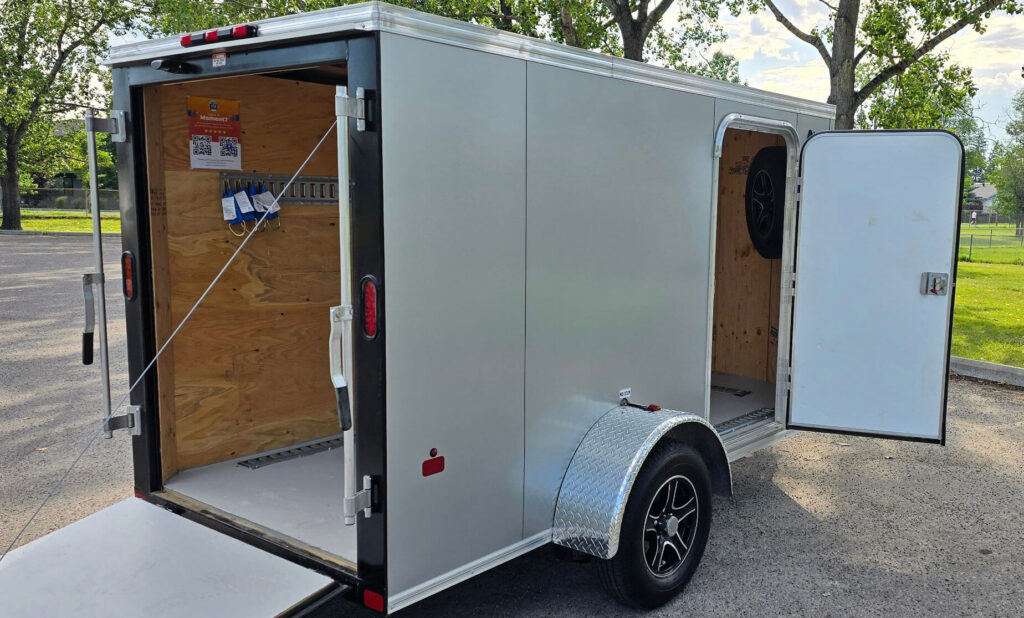
A single axle trailer has one axle shaft connecting two wheels. It is purpose-built for lightweight hauling, maximum maneuverability, and smaller tow vehicles. Because it has fewer moving parts, it weighs significantly less empty, leaving more of your vehicle’s towing capacity for the cargo itself.
Advantage
- Costs less to rent and tows easily behind a smaller half-ton or SUV.
- Turns tighter, so it backs into narrow driveways and tight alleys more easily.
- Weighs less, so it can be unhitched and pushed by hand into a tight spot.
Disadvantage
- Carries noticeably less payload than a tandem of the same size.
- Feels twitchier in crosswinds and when passing highway trucks.
- Leaves you stopped on the road if a tire fails.
Tandem axle enclosed trailer
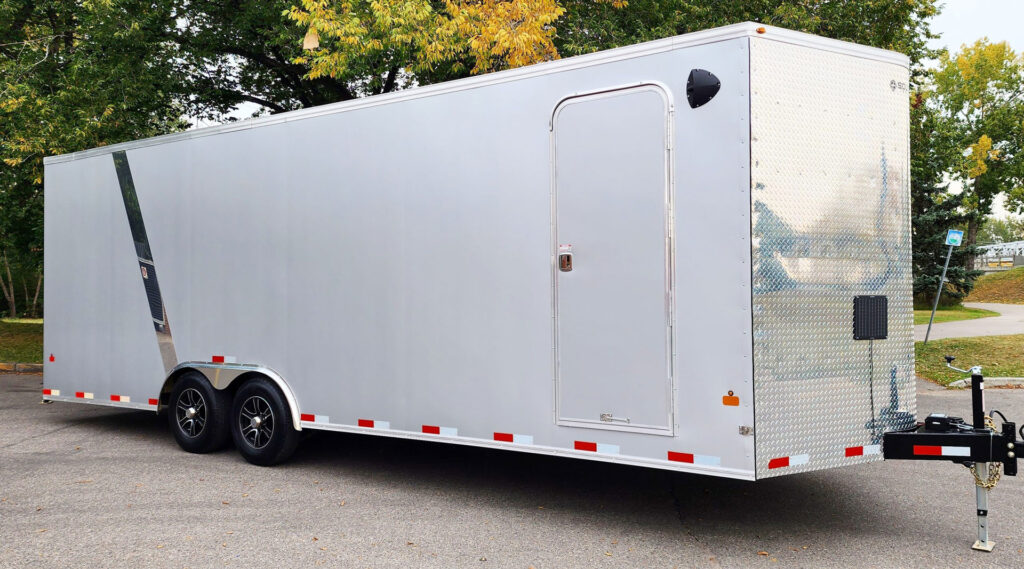
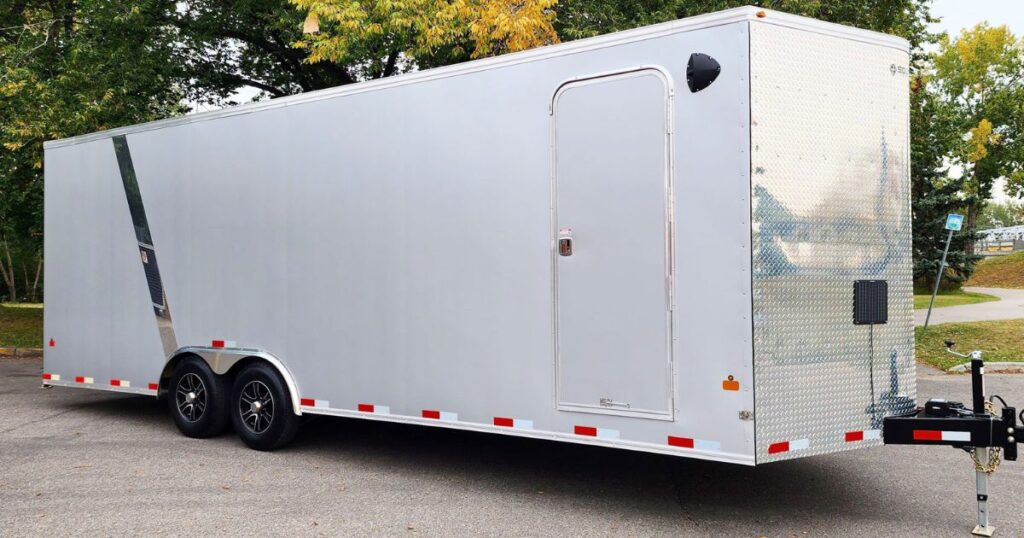
A tandem axle trailer utilizes two axles positioned close together, providing four wheels of road contact. This design drastically increases the trailer’s structural capacity and highway stability. The extra axle distributes the payload weight more evenly, making it the standard choice for heavy or high-density cargo.
Advantage
- Carries significantly more weight for bigger or heavier loads.
- Tracks straighter through crosswinds and past highway traffic.
- Keeps rolling safely to a stop if one tire fails on the road.
Disadvantage
- Costs more to rent than a single axle.
- Doubles the tires and bearings to maintain.
- Resists backing cleanly into tight driveways and cramped job sites.
- Requires a half-ton or heavier truck to tow safely.
How Much Can Each One Actually Carry
A single axle enclosed trailer typically carries somewhere between 1,800 and 3500 lbs of payload. We have our smallest one that can carry 3500 ibs and the payload is 2420.
A tandem axle enclosed trailer typically carries 7000 lbs up to 10,400 or more, depending on size and axle rating. We’ve seen renters try to fit a loaded UTV onto a single-axle unit meant for a couch and a few boxes, and it’s the kind of mismatch that shows up fast once the trailer’s hooked up and swaying. A tandem-axle 8.5×22, by comparison, carries that same UTV and a full pallet of gear without blinking.
The main gap is larger than most people expect because the tandem’s higher GVWR is paired with a slightly heavier empty weight, but the payload advantage is still substantial.
GVWR and Payload
Every trailer has 3 numbers that matter more than its length. GVWR (Gross Vehicle Weight Rating), Curb weight (or empty weight) & payload capacity.
The GVWR is the maximum number of the the total weight the trailer can handle, including its own frame, axles, and everything you load inside, as set by the manufacturer.
Curb weight, or empty weight is what it weighs with nothing in it.
And Payload is the maximum weight of cargo that a trailer can safely and legally carry.
To Calculate Payload Capacity, simply subtract its empty weight from its total weight limit. That is the actual capacity you can load on the trailer.
In formula: Payload Capacity=GVWR-Curb Weight
For example:
- A 6×12 single axle enclosed trailer has a GVWR of 2,990 lbs and an empty weight of about 1,200 lbs. Payload = 2,990 − 1,200 = 1,790 lbs.
- A 6×12 tandem axle enclosed trailer has a GVWR of 7,000 lbs and an empty weight of about 1,900 lbs. Payload = 7,000 − 1,900 = 5,100 lbs
That’s roughly 5100 ibs is the usable cargo capacity in the same floor size. For a weekend move or a couple of dirt bikes, the single axle is plenty. For a side-by-side, a zero-turn mower, or a full vehicle, you’ll blow past the single axle’s limit quickly.

Need a Trailer for Your Move?
Choose the right enclosed trailer size and get expert help from our team.
Which One Handles Better on the Road
A tandem axle is more stable at highway speed, especially in crosswinds and Alberta weather. A single axle turns tighter and is easier to maneuver in parking lots and driveways, but is not suitable for the highway.
Highway Stability and Crosswinds
The enclosed trailer shape is essentially a sail. Once you’re on the highway, crosswinds, passing trucks, and uneven pavement all push against that flat side. A single axle acts as one pivot point, so the trailer yaws more freely in response to side forces. A tandem’s two axles create a wider base that resists that side-to-side movement.
In practice, a loaded single-axle trailer is more prone to sway at highway speed than a comparably loaded tandem. This doesn’t make a single axle unsafe; proper tongue weight and a friction sway bar go a long way, but you will feel crosswinds and truck drafts more. On a long highway haul, that extra tandem stability means less driver fatigue and a straighter track. Under 50 km/h in the city, the difference barely matters.
Backing Up and Parking in Tight Spaces
On the open road, tandem axles win for stability. But in reverse, the single axle wins for beginners. A single-axle trailer responds more predictably to steering inputs when backing up. It turns tighter and is easier to place in a narrow alley or a tight job site.
A tandem axle requires more room to swing around because the front axle fights the rear axle during sharp turns. Experienced drivers often find a tandem easier to back up in a straight line because it doesn’t react as quickly to small steering corrections—but for tight, precise maneuvering, the single axle has the advantage.
Cost and Long-Term Value
Renting a single axle costs less per day than a tandem; that part is simple. But we always tell renters not to pick based on price alone; the right call comes down to what you’re hauling, not which one costs less per day. If your load needs the extra room and stability, a tandem is worth the extra cost. If it does not, you are just paying more for capacity you will not use.
Buying a trailer works the same way; choose based on what you haul and how much stability you need, not the price tag. If there’s one real difference worth pointing out between the two for a buyer, it’s upkeep: a single axle costs less to maintain than a tandem.
Why?
A tandem axle runs on four tires instead of two, so you’re maintaining four sets of wheel bearings and servicing electric brakes instead of just two. That adds up to higher upkeep over time. Where a tandem wins that cost back is resale, contractors and heavy equipment buyers want them, so they hold their value and stay in steady demand.
When to Choose a Single Axle Trailer
Choose a single axle enclosed trailer when:
- You’re hauling light to moderate loads, generally under 3500 lbs.
- Your trip is short and local: a household move across town, a dump run, or hauling lawn equipment.
- You need to back into a tight driveway or push the trailer into place by hand.
- You’re towing with a smaller SUV or a half-ton truck.
You want the lowest rental cost and the least amount of trailer to manage.
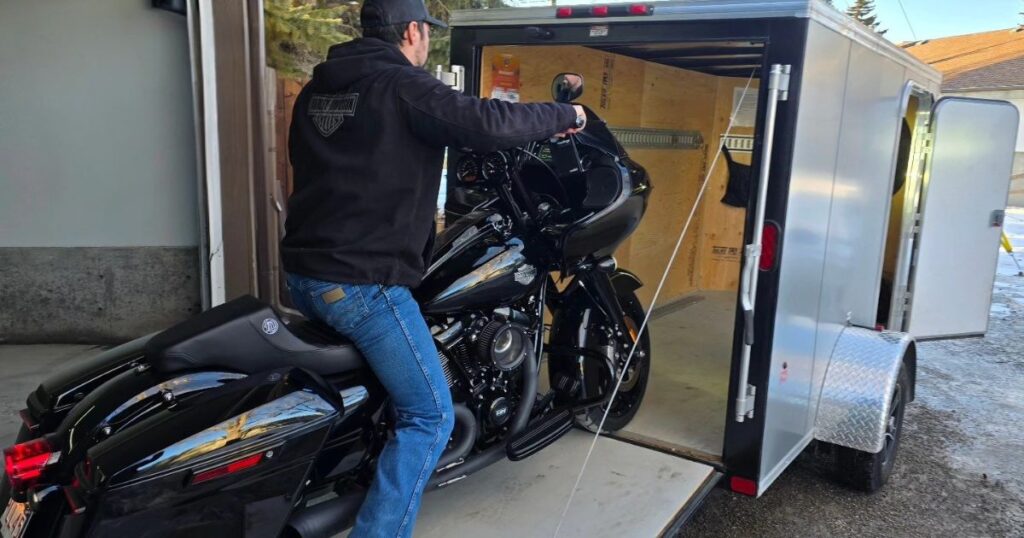
Single axle trailers are ideal for: one motorcycle or ATV, light landscaping or yard equipment, a local household move, or a supply run across the city.
When to Choose a Tandem Axle Trailer
Choose a tandem axle enclosed trailer when:
- You’re hauling heavier loads, typically 7,000 pounds and up.
- Your trip includes highway driving, especially in wind or over long distances.
- You’re carrying cargo that can’t afford to shift, tip, or get damaged in transit.
- You’re towing with a half-ton or heavier truck built for the extra weight.
- You want the redundancy of a second axle if a tire fails mid-trip.
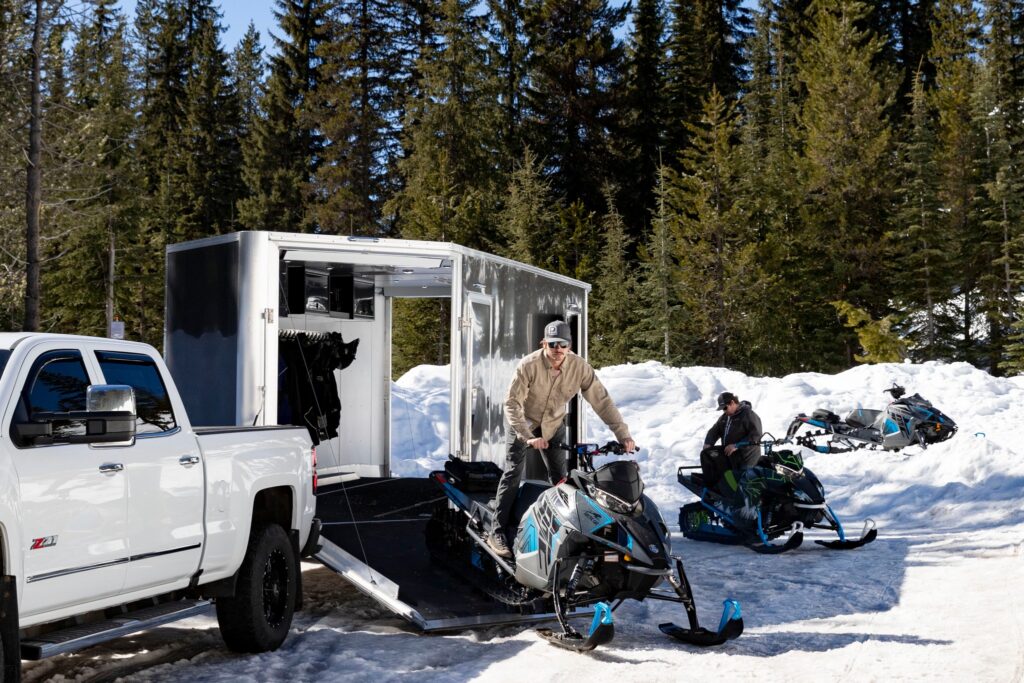
Tandem axle trailers are ideal for: two ATVs or a UTV, a full vehicle on a car hauler, snowmobiles and seasonal gear, or any highway haul where stability matters more than price.
Which One Should You Rent for Your Trip
The fastest way we’ve found to help a renter decide is to start with what’s going in the trailer, not the price tag.
Local moves, lawn or landscaping equipment, one motorcycle or ATV
We’d point you toward a single-axle enclosed trailer in the 5×8 to 6×12 range. It comfortably covers this without you paying for capacity you won’t use.
Two ATVs, a UTV, or a full vehicle
This is tandem axle territory. A 7×12 to 7×16 enclosed trailer handles two ATVs or a UTV, while a car hauler like our 20+2 V-nose or 24 ft bumper-pull is purpose-built for a vehicle.
Snowmobiles or seasonal gear
Sled weight adds up fast, and we’ve seen most riders size up to tandem once they’re loading two or more machines, especially for winter highway driving where the extra stability matters more.
Long highway hauls vs. short city trips
Distance changes the calculation even for the same cargo. An hour across the city tolerates more sway and a rougher ride than four hours on the highway in crosswinds, so trip length alone is a reason we’ll sometimes suggest sizing up to tandem even when the load itself would fit a single-axle trailer.
The Bottom Line
After renting out both configurations for years, our advice comes down to this: match the axle to the job, not to whichever trailer happens to be available.
A single axle covers most local moves, one ATV or motorcycle, and short trips where handling matters more than raw capacity. A tandem axle earns its cost the moment the load gets heavier, the trip gets longer, or the cargo is something you can’t afford to have shift on the highway.
When in doubt, size up, a tandem carrying a light load is a non-issue, but a single axle struggling with too much weight is a real problem once you’re on the road.
faq
Frequently Asked Questions
Does a single axle enclosed trailer sway more than a tandem in wind?
A single-axle enclosed trailer can feel twitchier in gusty crosswinds because there is no second axle to help resist the sideways push against its tall, flat sides. Tandem axles track straighter for the same reason, but correct tongue weight and even loading still matter more than axle count for controlling sway.
Do I need a bigger tow vehicle for a tandem axle enclosed trailer?
Not because of the second axle itself, but because tandem enclosed trailers are usually built for heavier loads. A loaded 7x16 or 8.5x22 tandem often needs a half-ton or heavier truck with a proper weight distribution hitch, while a small single axle unit tows comfortably behind most SUVs and light trucks.
What size enclosed trailer do I need for ATVs, a motorcycle, or a car?
It depends on what you’re loading and how many. Our enclosed trailer sizing guide breaks it down by ATV count, motorcycle, or vehicle so you can match interior dimensions and weight capacity to your exact load before you book, rather than guessing and coming up short on moving day.