




Over the years renting trailers out of Calgary and across Alberta, we’ve talked to a lot of people who aren’t sure which trailer to book. Some grab a tilt deck because it looks simpler. Others grab a deckover because it looks bigger. Then, they hook up at the yard, tow it out to the job, and about half of them end up wishing they’d booked the other one.
The right choice isn’t about which trailer is “better”; it’s about which one fits what you’re actually hauling and where you’re loading it.
A skid steer operator who loads solo on gravel job sites needs something completely different from a contractor moving palletized materials with a forklift.
So before you book, let’s walk through what each trailer actually does, where each one wins, and most importantly, which one is right for your specific load.
Key Takeway
- Choose a tilt deck for low clearance equipment and a gentler 5 to 10 degree loading angle.
- Choose a deckover when you need full deck width for wide or oversized loads.
- Tilt decks are easier for solo loading and frequent loading or unloading because they do not require separate ramps.
- Deckovers work well for forklift side loading, pallets, and rough or uneven ground.
- Focus on loading angle and deck width when deciding between the two trailer types
The Basics: Tilt vs. Deckover Trailers
Tilt Deck Trailer
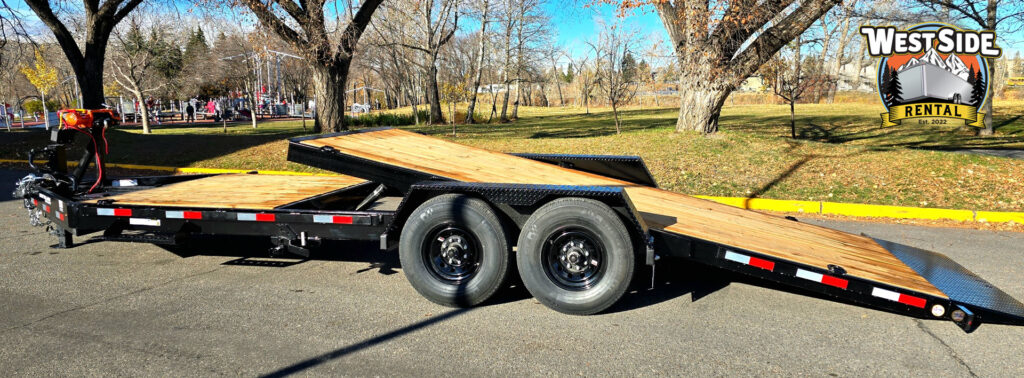
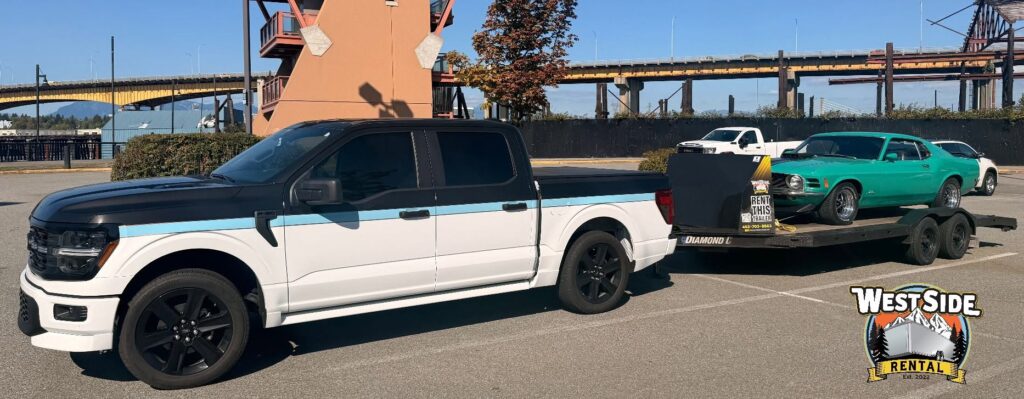
A tilt deck trailer has a bed that tips down to the ground on its own, so you can just drive or roll your equipment straight on. No ramps needed; the deck itself acts as the ramp.
Tilt decks produce a shallow loading angle of roughly 5 to 10 degrees, which is significantly gentler than the 12 to 18 degrees typical of ramp-based trailers. That shallow approach is the whole reason tilt decks exist.
Deckover Trailer
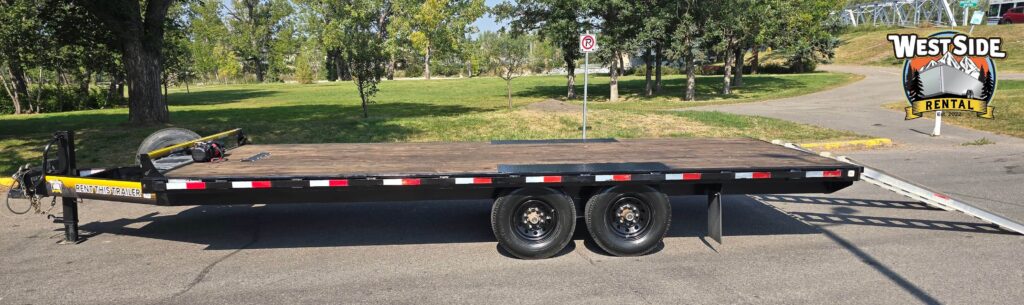
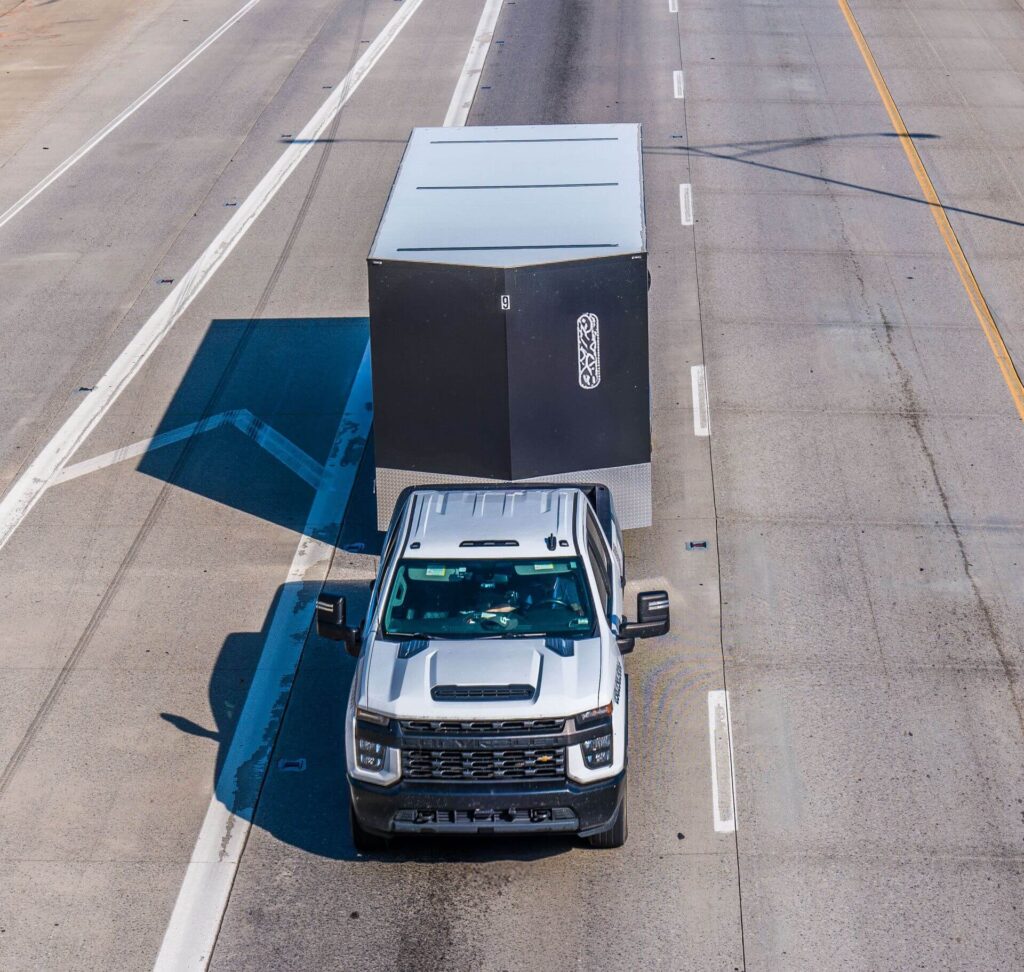
A deckover trailer has a flat bed that sits above the wheels instead of between them, so there are no fenders in the way. You load it using ramps that fold out from the back.
The key difference is that both are made for heavy-duty hauling, but it depends on the hauling equipment and needs.
Tilt Deck Trailers — Advantages & Limitations
Advantages
- Lowers all the way to the ground, so low-clearance machines don’t have to fight a steep approach angle
- No loose ramps to lift, carry, or lock into place, which saves real time on multi-stop days
- Deck sits lower between the fenders, keeping the load closer to the ground and the trailer more stable while towing
Limitations
- Fenders sit inside the deck width, so anything wider than standard clearance won’t fit
- Hydraulic tilt models have a pump and cylinder that need routine maintenance, one more thing that can wear out over years of use
- Gravity tilt decks need enough weight rolling on to trigger the tilt, which can feel unfamiliar the first time you load something light
Deckover Trailers — Advantages & Limitations
Advantages
- Full deck width with no fenders in the way, so wide equipment and oversized loads have room to sit
- Flat, open sides make it easy to side-load pallets, lumber, or pipe with a forklift instead of driving straight on
- Higher deck means more clearance underneath, which matters on rough or uneven ground
Limitations
- Higher deck means a higher center of gravity and a steeper ramp angle, low-clearance equipment can bottom out or drag
- Ramps have to be pulled out, positioned, and stowed again every time you load or unload
- Loading and unloading solo takes more effort than a tilt deck, especially with heavier ramps
Head-to-Head Comparison
| Feature | Tilt Deck | Deckover |
|---|---|---|
|
Loading mechanism |
Pivoting bed, gravity or hydraulic
|
Fixed deck, fold-down or slide-out ramps
|
|
Upfit / ramp feature
|
No ramps needed; some hydraulic models offer remote-controlled tilt
|
Fold-down, slide-out, or spring-assist ramp options depending on model
|
|
Loading angle
|
Low and gradual, 5 to 10 degrees; no transition lip
|
|
|
Deck height off the ground
|
Lower; deck rides between wheels
|
Higher; deck sits over wheels by 4 to 6 inches
|
|
Deck height off the ground
|
Lower; deck rides between wheels
|
Higher; deck sits over wheels by 4 to 6 inches
|
|
Deck width
|
Fenders reduce usable width
|
Full 96 to 102 inches; no fenders
|
|
Weight capacity
|
Comparable, sometimes slightly higher
|
Comparable, varies by axle configuration
|
💡 Sum of the table for you:
The table really comes down to two key factors: loading angle and deck width.
If what you’re hauling has low ground clearance, a mower deck, a car, a scissor lift, the tilt deck’s gradual angle is the difference between an easy load and one that scrapes on the way up. If what you’re hauling is wide or needs to come on from the side, a deckover’s fender-free deck is the one that actually fits it. Everything else in that table matters, but those two rows are usually what the decision comes down to.
Which Trailer is Suitable for your Tilt deck Load
Hauling a Car, Truck, or Low-Clearance Vehicle
Low-slung cars and trucks with aftermarket ground effects don’t handle a steep ramp angle well. We point these renters toward the tilt deck almost every time, the gradual approach means the bumper and undercarriage clear without drama.
Hauling a Skid Steer, Mini Excavator, or Tractor
Tracked and wheeled equipment with a short wheelbase loads cleanly on either trailer, but if you’re loading and unloading more than once a day, the tilt deck’s no-ramps setup saves real time across a job site.
Hauling Something Tall or Bulky
Taller loads benefit from the tilt deck’s lower ride height; less height overall means better stability and fewer clearance concerns on the way to the job site.
Loading and Unloading Without a Second Person
Working solo, the tilt deck wins outright. There are no ramps to wrestle into place or lock down, you load, latch, and go.
Renting in Winter or Wet Conditions
A wet or icy deck is a hazard either way, but ramps add an extra step where footing matters most: positioning and climbing a slick ramp. The tilt deck removes that step entirely.
Need a Tilt Deck or Deckover Trailer?
Choose the trailer that matches your equipment, load width, and loading conditions. Both are available for rent in Calgary.
Which Trailer is Suitable for Deck over Load
Loading Palletized Materials with a Forklift
This is a deckover job. The open sides and flat deck mean a forklift can set a pallet straight down from the side without threading it past fenders or rails.
Loading on Gravel, Uneven Ground, or Acreage Sites
Rough ground favours the deckover’s extra clearance underneath the deck; it won’t bottom out crossing a rutted driveway or a soft field entrance the way a lower trailer might.
Hauling ATVs, UTVs, or Side-by-Sides
Both trailers handle recreational machines fine, but if you’re bringing a couple of machines side by side, the deckover’s extra width gives you more room to work with.
Quick Decision Checklist
- Choose a tilt deck if your equipment has low ground clearance
- Choose a tilt deck if you’re loading and unloading more than once in a day
- Choose a tilt deck if you’ll be working solo
- Choose a deckover if your load is wider than a standard fendered deck
- Choose a deckover if you’re side-loading with a forklift
- Choose a deckover if you’re crossing rough or uneven ground to get to the load
Still not sure? Tell our team what you’re hauling, and we’ll point you to the right one
Final Thought
Neither trailer beats the other on paper; they’re built for different jobs. The tilt deck earns its keep on low-clearance loads and repeat loading days; the deckover earns its keep on wide, mixed, or forklift-loaded cargo. Match the trailer to the load in front of you, and either one will do exactly what it’s built to do.
faq
Frequently Asked Questions
Is a tilt deck trailer heavier than a deckover?
Often, yes. A tilt deck carries the weight of both the trailer frame and the tilting bed frame, while a deckover's deck is fixed directly to the frame. The difference is usually modest and varies by model, so check the specific trailer's curb weight before towing.
Do tilt deck trailers need ramps?
No. The deck itself pivots down to ground level, so there's nothing separate to carry or set up. That's the main appeal for renters loading and unloading several times a day.
Can you side-load a deckover trailer?
Yes, and it's one of the deckover's biggest advantages. With no fenders breaking up the deck, a forklift can set a load down from the side instead of driving straight up the back.
Which is better for hauling a tractor or skid steer?
Either trailer works for most tractors and skid steers. If you're loading and unloading repeatedly through the day, the tilt deck saves time. If the machine is on the wider side, the deckover gives you more room.
Which trailer tows better, tilt or deckover?
Tilt decks generally sit lower and closer to the axle line, which gives a slightly lower center of gravity and steadier towing. Deckovers ride higher, so they can feel a touch less planted at highway speed, though a properly loaded and balanced trailer of either type tows safely.
Can I load a car on a tilt deck trailer?
Yes, and it's one of the better use cases for a tilt deck. The gradual, ground-level loading angle avoids the scraping that a steep ramp angle can cause on low bumpers and ground effects.