




Plenty of Calgarians still move between November and March. Off-peak housing deals, less competition for leases, and flexible move dates make winter a practical time to relocate. That is also when the do-it-yourself shortcuts start to look tempting: borrow a pickup, or rent a cheaper open flat deck and strap a heavy-duty tarp over the load.
In Calgary, snowfall alone is rarely the problem. Road brine, flying gravel chips, and freeze-thaw moisture tend to be the bigger threats to uncovered cargo, and an enclosed trailer keeps most of all three away from your belongings. It will not heat them, though, so a few items still belong in the cab.
Key Takeaways
- Calgary winter roads attack cargo with brine spray, gravel projectiles, and slush—not just snow.
- Open trailers and tarps offer zero protection against any of the three.
- Standard enclosed rentals are weather-sealed, not heated: they block brine, gravel, and moisture, but interior air still tracks outdoor temperature.
- Electronics and appliances need 24–48 hours of room-temperature acclimation before power-up, regardless of how they were transported.
- Snow-route parking bans can get a staged trailer ticketed and towed: $120 and a tow during a declared ban.
What Actually Ruins Uncovered Cargo on Calgary Winter Roads
Liquid Brines and Road Salt Spray
The City of Calgary uses two de-icing chemicals, sodium chloride and calcium chloride, applied as rock salt or as liquid brines. Those brines also go directly onto roads as an anti-icing agent. Calgary’s own streets get this treatment from the City, while Deerfoot Trail and Stoney Trail are maintained by the Province of Alberta.
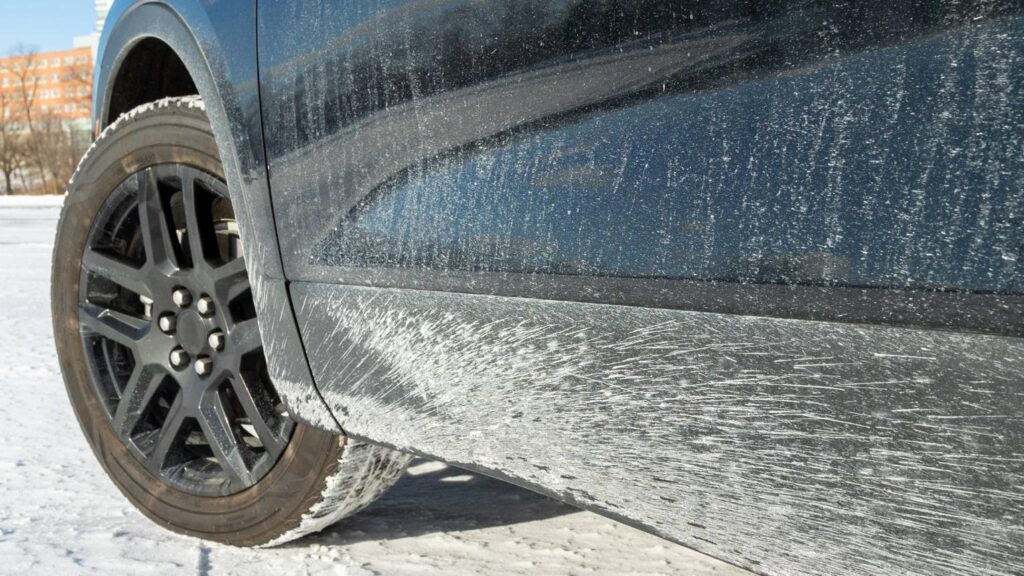
Traffic at highway speed throws that chemistry back up as a fine, wet, salty spray. On an open trailer, the mist can settle into mattress fabric, leather, and upholstery, leave white residue on finishes, and speed up corrosion on bare metal. Salt is corrosive enough that the City also uses a beet-juice and salt brine mix, which it describes as less corrosive than road salt.
Below -15°C: Calgary's "Pickle" Gravel Spray
Deep cold changes the materials. The City says salt is less effective below about -15°C, so crews lean on a sand-based mix called pickle, made of 3 per cent salt and 97 per cent fine gravel, along with liquid calcium chloride. The sanding chips are roughly six-millimetre pieces of rock, and the exact mix depends on pavement temperature and the forecast.
Tires can kick that gravel backward at 80 to 100 km/h. An open deck or pickup bed has nothing to stop it, so chips can nick wood finishes, scuff appliance panels, and crack framed glass or screens.
Chinook Freeze-Thaw Slush and Wet Cardboard Failure
Calgary averages roughly 128 freeze-thaw cycles per year, and Chinook winds can swing temperatures by 30°C or more in hours. Snowbanks turn to slush, and slush finds its way into corrugated cardboard.
Wet cardboard loses compressive strength fast. Packaging research validates that corrugated board loses roughly 50% or more of its compression strength when relative humidity rises from 50% to 90%. Once moisture wicks into box walls, the boxes can look intact at loading and collapse during unloading, dropping fragile contents onto icy pavement. The same moisture drives wood-joint swelling and veneer lifting on furniture.
Enclosed vs. Open Trailer: The Winter Calculus in Calgary
Open/flat deck trailer
Rather Than Enclosed Trailer
An enclosed trailer costs more per day, so weigh that against what a salt-stained couch, a damaged mattress, or a cracked TV costs to replace. Solid walls and a roof keep most spray, gravel, and precipitation off the load, and doors that lock keep the contents out of sight. For upholstered furniture, mattresses, electronics, and boxed household goods, enclosed is the sensible default in a Calgary winter.
An open trailer can still make sense for a short, local haul of weather-tolerant items, such as building materials or firewood, on a dry Chinook day. For trailer sizing, loading, and towing basics, the guide on how to move safely using an enclosed trailer covers the details, so this article sticks to what changes in winter.

Get Ready for Winter Towing in Calgary
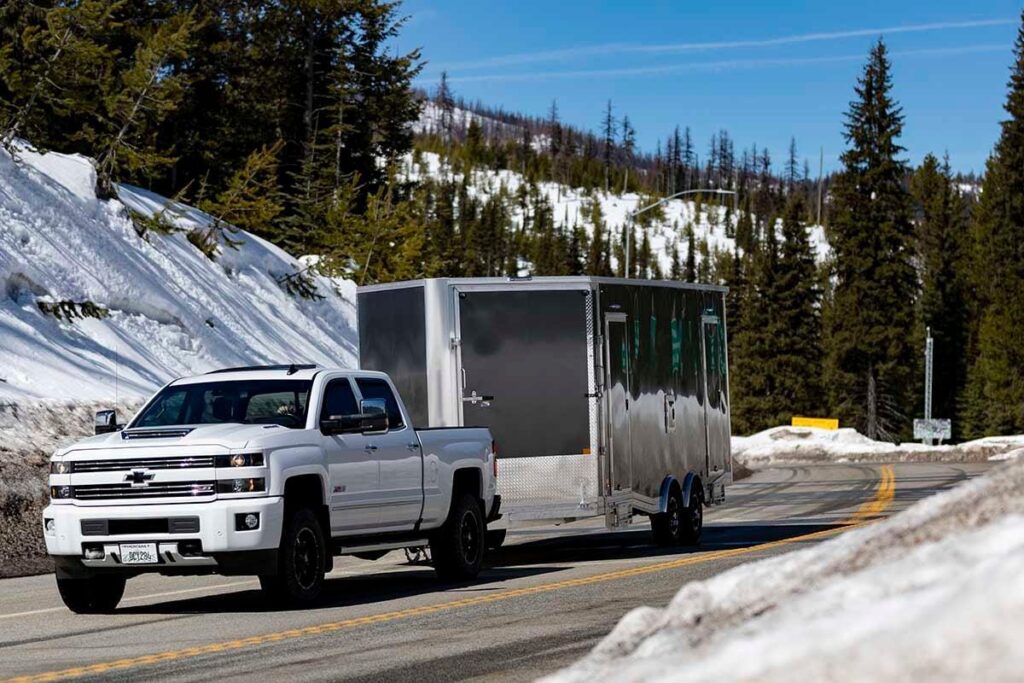
From enclosed trailers to flatdecks, choose a trailer that suits your vehicle, cargo, and winter hauling needs. Check your towing capacity and make sure your hitch, brakes, and tires are ready before heading out.
Which Household Items Need Enclosed Protection Most?
At this point we forgot to clarify one things, let is be first. When you rent an Enclosed trailer this have solid walls, a roof, and doors, so they keep out wind, road spray, and precipitation. They are not heated or insulated, though, so the air inside will track Calgary’s outdoor temperature. Think of the trailer as protection from moisture and impact, not from cold. That distinction shapes how each category of belongings should travel.
Electronics & Appliances (Preventing Condensation Short-Circuits)
The main electronics risk is not the cold itself but the trip from cold to warm. When a chilled device meets warm indoor air, moisture can condense on and inside it, and manufacturers and university IT departments warn that this can be enough to cause electrical shorts if the device is powered on too soon.
Keep small devices in the heated cab; let TVs and appliances sit wrapped, unplugged and upright at room temperature for 24–48 hours before use. Visible condensation means wait longer.
Solid Wood Furniture, Veneers & Leather
Rapid dry-cold to warm-indoor shifts contract wood joints and can split them. Damp slush accelerates veneer peeling and leather staining.
Rule: breathable wraps, not sealed plastic. Wrap wood and leather in moving blankets. Do not shrink-wrap damp furniture, because sealed plastic traps moisture against the surface and concentrates the damage. Unwrap only after the piece has acclimated indoors.
Cardboard Boxes, Mattresses & Cold-Sensitive Goods
Bare cardboard must not sit directly on a trailer floor where boot snow melts. Plastic totes go on the floor; cardboard stacks on top. Mattresses and upholstery ride wrapped and elevated off the floor.
Houseplants, liquid cleaning products, paint cans, and canned goods stay in the heated cab so they do not freeze and burst.
4 Quick Tips for Packing an Enclosed Trailer in Freezing Weather
These tips cover only the winter side of packing. For loading order, weight distribution, and strapping, see the full guide linked below.
- Acclimate electronics and wrap them in blankets. Keep high-value electronics in the heated cab if you can. Anything that rides in the trailer should be padded with moving blankets, then left to warm up slowly at the other end before it is plugged in.
- Use plastic bins for moisture-sensitive and ground-level items. Place lidded totes on the floor and stack cardboard boxes above them, so snow tracked in during loading does not wick into the cardboard. Totes also suit documents and photos, and a silica gel packet inside a box of electronics or papers helps keep moisture down.
- Keep door seals and latches ice-free. Wipe snow and meltwater off the rubber door seals and latches before you close up, so the rear and side doors do not freeze shut between stops. A can of lock de-icer in the cab helps if a latch does stick.
- Lock up overnight, with realistic expectations. If your move spans two days, a locked enclosed trailer on your own driveway keeps a half-loaded move out of the weather and out of sight, and enclosed rentals include GPS tracking. It is not heated and it is not a storage unit, so keep cold-sensitive items and valuables with you.
Need step-by-step loading help? See how to move safely using an enclosed trailer for weight distribution, strapping, and the full pre-trip checklist.
Calgary Winter Moving Logistics: Snow Routes, Dark Afternoons & Trailer Access
Watch for snow route parking bans.
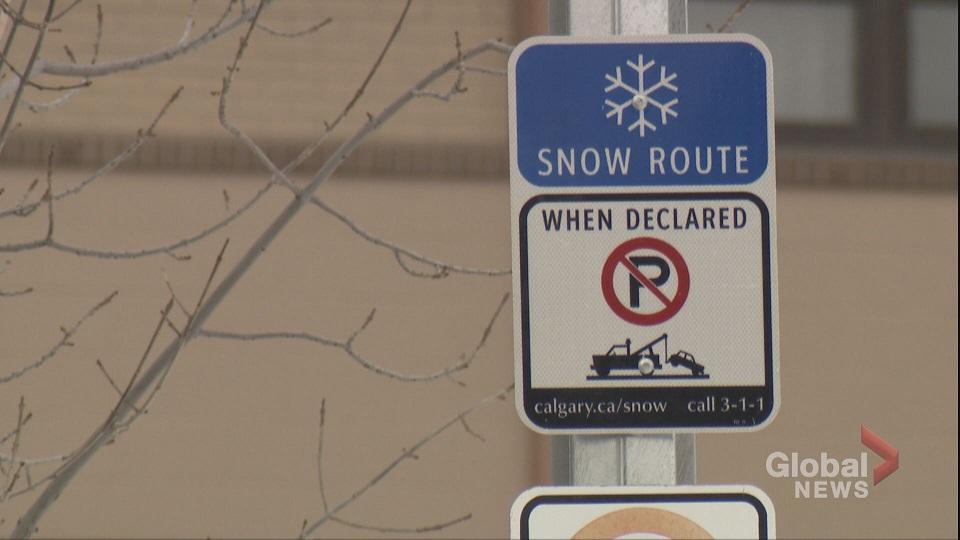
Blue signs with a white snowflake mark Calgary snow routes. When a ban is declared, parking is restricted for up to 72 hours. Vehicles left on a snow route face enforcement up to a $120 parking ticket and towing. Downtown and Business Improvement Area ParkPlus zones on snow routes permit parking from 6 a.m. to 9 p.m. only during a ban; overnight parking from 9 p.m. to 6 a.m. is prohibited. Check calgary.ca snow report or call 311 before you leave any vehicle on the street, and sign up for the City’s email or text alerts.
Trailers have an extra rule. A removable trailer parked on a public street or alley in Calgary must stay attached to its towing vehicle, and a detached trailer on a public roadway carries its own fine. The City also does not typically plow residential streets. Crews maintain packed snow and level ruts instead, so expect ruts and windrows near your driveway, and shovel the driveway apron after the plows pass so you can back in.
Beat the early sunset. Calgary daylight drops to roughly 8 hours in December, with sunset near 4:30 p.m. An enclosed trailer with interior LED lighting and a 36-inch side-entry door lets you keep loading safely after dusk without wrestling a heavy rear ramp repeatedly in the cold.
Prevent interior condensation on multi-day moves. Sweep boot snow off the floor and ramp extension before closing for the night. Wipe rubber door gaskets dry so they do not freeze shut. If a Chinook temperature spike is forecast overnight, add silica or moisture-absorber packs inside the trailer.
Calgary Winter Moving Logistics: Snow Routes, Dark Afternoons & Trailer Access
In winter, we recommend sizing up slightly. A larger interior gives you space to work, so you load faster and keep the doors open for less time in cold air, and it fits bulky wrapped furniture without scraping the walls. If your load falls between two sizes, choose the larger one, as long as your vehicle can tow it.
When you book or visit our rental yard, we always ask about your vehicle’s towing capacity, hitch ball size, and brake controller setup to make sure your truck is properly equipped to tow the selected trailer. Our guides on what trailer your truck can tow and trailer plugs and hitches can help you understand these requirements.
| What you’re hauling | Axles | GVWR | Payload | Good starting point |
|---|---|---|---|---|
|
10 ft (5×10)
|
Single |
3,500 lbs |
2,420 lbs
|
Studio, dorm, or a few single-room pieces on tight streets
|
|
12 ft
|
Tandem (2 x 3,500 lbs) |
7,000 lbs
|
5,100 lbs |
Small 1-bedroom move |
|
14 ft (7×14) |
Tandem (2 x 3,500 lbs) |
7,000 lbs
|
5,100 lbs |
1-bedroom with larger furniture |
|
16 ft (7×16) |
Tandem (2 x 5,200 lbs) |
10,400 lbs |
6,300 lbs |
2-bedroom apartment or townhome, with side door and E-track |
|
20 to 24 ft
|
Tandem (2 x 5,200 lbs)
|
10,400 lbs (20 and 22 ft), 11,400 lbs (24 ft)
|
6,300 lbs
|
3+ bedroom homes and full appliance sets
|
Note: Bedroom count is only a rough guide. The amount and weight of your belongings determine the size you need. Trailer specifications vary, so confirm the details on the individual product page. Payload matters as much as floor space, as solid wood furniture, appliances, and boxes of books add weight quickly.
Make Your Calgary Winter Move With Better Protection
A Calgary winter move puts belongings in the path of road brine, gravel spray, Chinook slush, and the moisture that follows when cold things warm up. An enclosed trailer keeps most of that off your load, which makes it a practical choice for household moves, as long as you plan for what it does not do.
Pick a size with room to work, check your vehicle’s towing setup, and keep an eye on snow route bans and daylight. When you are ready, review the available enclosed trailer sizes and book the one that fits your move.
faq
Frequently Asked Questions
How do Chinook winds affect moving day in Calgary?
A Chinook can lift temperatures by 15 to 20 degrees Celsius within hours, melting snow into slush and puddles. That makes driveways slick and soaks cardboard. Check the forecast, keep boxes off wet ground, and have a backup date in case conditions change quickly.
How long should electronics warm up before I turn them on?
Guidance varies from a few hours to about a day, so follow the manufacturer's manual and err on the longer side. Leave devices unplugged indoors until they reach room temperature, because condensation can form on cold electronics and cause shorts if they are powered on too soon.
Can road salt and gravel damage belongings on an open trailer?
Yes, they can. Traffic throws salty spray and sanding gravel backward, and the City of Calgary uses a beet-juice brine it describes as less corrosive than road salt. On an open deck, expect possible residue on fabric, corrosion on bare metal, and chips on finishes or glass.
How do Chinook winds affect moving day in Calgary?
A Chinook can lift temperatures by 15 to 20 degrees Celsius within hours, melting snow into slush and puddles. That makes driveways slick and soaks cardboard. Check the forecast, keep boxes off wet ground, and have a backup date in case conditions change quickly.