




Trailer axles do a lot more than most people think. They are not just metal bars holding the wheels. Axles control how much weight a trailer can carry, how stable it feels on the road, and how safely it can stop.
If you rent, buy, or tow a trailer, understanding the axle is important. The axle affects load limits, tire wear, braking, and towing control. When the axle is the right size and used the right way, the trailer feels smooth and safe. When it is overloaded or misunderstood, problems start quickly.
This guide explains what trailer axles do, how they work, and why axle ratings matter. Everything is explained in simple terms so you can make safer and smarter trailer decisions.
Key Takeaways
- Choose trailer size based on your cargo dimensions, weight, and towing capacity
- Measure your largest items first to ensure everything fits safely
- Pick the trailer type based on your load: enclosed for protection, flat deck for large items, dump for loose materials
- Avoid overloading by checking payload capacity and GVWR before loading
- Choose a slightly larger trailer when unsure to reduce extra trips
- Match the trailer size with your vehicle’s towing limits for safer handling
What Is a Trailer Axle?
A trailer axle is the component that supports the trailer and holds the wheels in place. It carries the weight of the trailer as well as facilitates its movement along the road. Without axles, a trailer cannot move, balance, or carry cargo safely.
The axle connects important parts like the wheel hubs, bearings, and sometimes brakes. All these components interact to ensure that the trailer moves, stops, and balances.
In simple terms: the axle on the trailer plays a major role in the movement and weight-supporting mechanism of the trailer itself.
What Do Trailer Axles Actually Do?
Think of a trailer axle like the legs of a table. If the legs are strong and even, the table stands firm. If not, it wobbles or breaks.
In the same way, the axle is the main shaft that connects the trailer’s wheels and supports the load. It holds the load, lets the wheels turn, and keeps the trailer balanced while moving.
Trailer axles also work with the suspension system, such as leaf springs or torsion axles, to absorb bumps and road shock.
Each axle includes important parts like the axle beam, spindles, wheel hubs, bearings, and often built-in brakes. Today mostly axles include built-in brakes, which help the trailer slow down safely when you press the brake pedal.
Types of Trailer Axles and How They Work
Trailer axles are commonly used in 3 types: Single Axle, Tandem (Double) Axle, and Triple Axle. These types are required based on size, weight, and purpose.
Single Axle Trailers
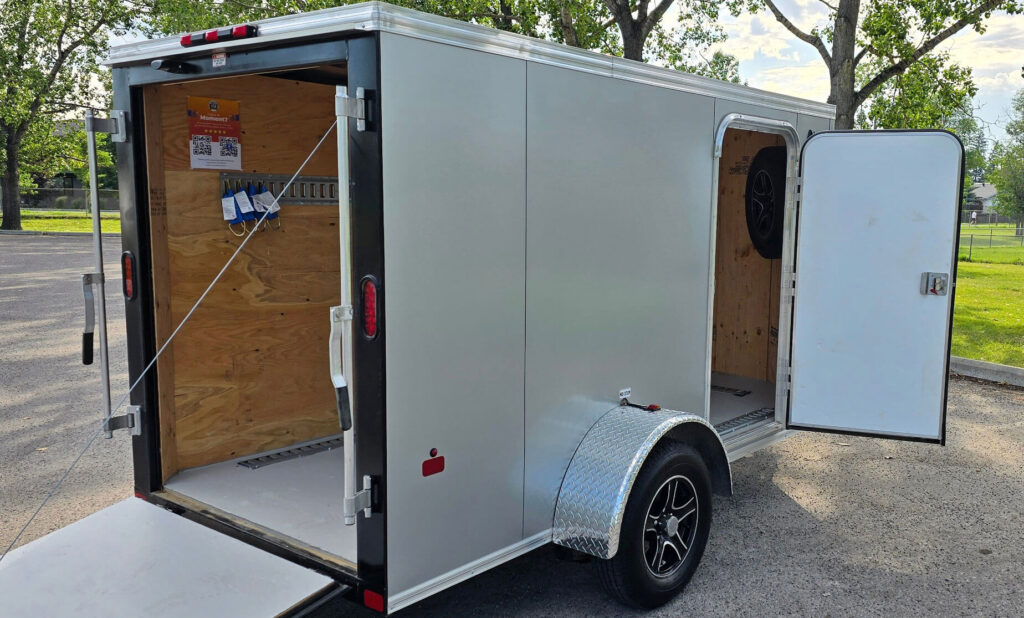
Single-axle trailers use one axle with two wheels and are best suited for light-duty tasks. These are commonly used for small-sized enclosed (10 ft enclosed) and utility trailers, especially for short-term local hauling.
From the cost-effective side, these are cheap but feel less stable at higher speeds or when carrying uneven or heavy loads.
Tandem (Double) Axle Trailers
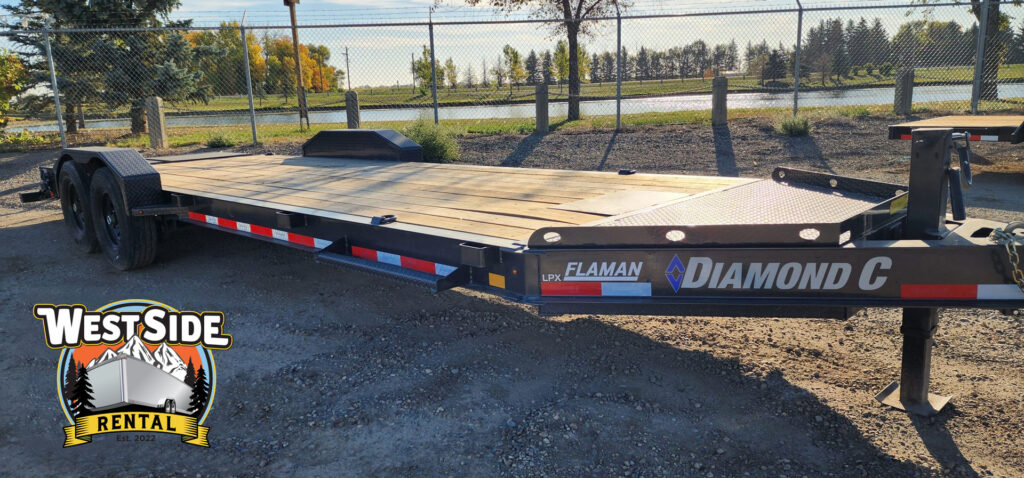
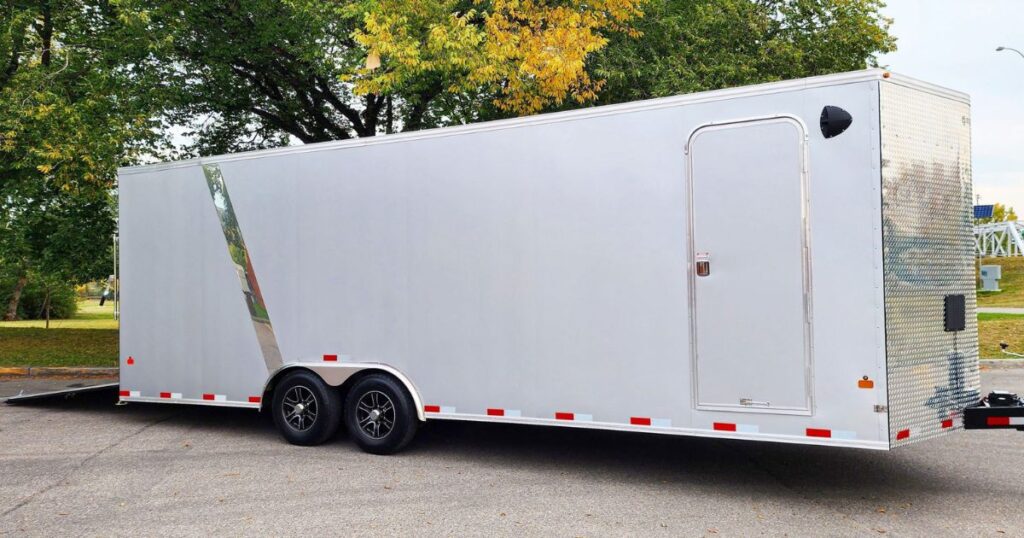
Tandem (also called double axle) trailers have two axles and four wheels. The weight is split between the two axles, which puts less stress on each axle and makes the trailer more durable.
This setup is more stable compared to a single axle. Also, towing is smoother and easier to control, especially when braking. Tandem axles are ideal for heavy-duty trailers such as enclosed and flat-deck trailers. You often see them on car haulers, equipment trailers, and rental trailers.
Triple Axle Trailers
Triple axles are mainly for very heavy loads and are often not required for general use. They are suitable for commercial hauling, where stability and weight capacity are most important.
With three axles, the trailer spreads the weight well, but it also means more tires and bearings to maintain, as well as higher inspection and service costs. This setup is less simple than single or tandem axles and is built just to carry extra-heavy loads safely.

Need the Right Trailer for Your Load?
Get expert help choosing a trailer that fits your hauling needs.
How to Match Your Load to the Right Trailer Size
When you are going to rent or buy a trailer, you will see that each trailer has a different axle rating. Axle ratings help you understand how much weight a trailer can safely carry. This includes the trailer weight and the cargo on that axle. It is often shown as GAWR (Gross Axle Weight Rating).
The most common ratings are 3,500 lb axles, 5,200 lb axles, and 7,000 lb axles.
Commonly used:
- 3,500 lb axle – light-duty trailers
- 5,200 lb axle – medium-duty enclosed or equipment trailers
- 7,000 lb axle – heavy-duty commercial trailers
If you see a trailer with 2 × 5,200 lb axles, that means the total axle capacity is 10,400 lbs.
Why Axle Rating Is Not the Same as Trailer Payload
Don’t be confused between the Axle Rating and Trailer Payload. The Payload is the cargo weight only. It remains after subtracting the trailer’s empty weight. If you want to calculate the payload capacity, then just subtract the trailer’s empty weight from the GVWR.
Payload Capacity = GVWR – Curb Weight (trailer’s empty weight)
Final Thought
From small moves to large hauling projects, selecting the right trailer size can save time, reduce extra trips, and make towing easier.
Take the time to understand your load and choose a trailer that fits your needs before starting your next project.
faq
Frequently Asked Questions
What does a trailer axle do?
A trailer axle supports the trailer's weight, holds the wheels, and keeps it balanced while moving. It also connects to the brakes and suspension for safe stops.
What is the difference between single axle and tandem axle trailers?
Single axle trailers cost less and are easier to maneuver but carry lighter loads. Tandem axles split weight across two axles, giving more stability and capacity.
What does a 5,200 lb axle rating mean?
A 5,200 lb axle rating means that single axle can safely carry up to 5,200 lbs. On a trailer with 2 x 5,200 lb axles, total axle capacity is 10,400 lbs.
Is axle rating the same as trailer payload?
No. Axle rating (GAWR) is the maximum weight an axle can hold. Payload is only the cargo weight left after subtracting the trailer's empty weight from its GVWR.
How do you calculate trailer payload capacity?
Subtract the trailer's curb weight (empty weight) from its GVWR. The result is your payload capacity, the maximum cargo weight you can safely load and haul.
When do you need a triple axle trailer?
Triple axle trailers suit heavy commercial hauling where extra stability and capacity matter most. They cost more to maintain due to added tires and bearings.