




Moving goods on a flatbed trailer can feel tricky if you’re not sure where to start. A flatdeck trailer is the most cost-effective way to transport your cargo from one city to another. You can haul heavy-duty cargo to small cargo—everything with the trailer.
However, it also has some challenging points. One of them is securely transporting the cargo. A small mistake can make your trailer unbalanced, putting you at risk while riding it and potentially damaging your cargo as well.
So the question is: what is the safest way to load a flatdeck trailer? In this guide, we’ll show you exactly how. You’ll get a clear, step-by-step plan for transporting your load safely.
Key Takeaways
- Choose a flatbed trailer that matches your cargo’s size, weight, and hauling requirements
- Follow the 60/40 weight distribution rule to improve stability and reduce trailer sway
- Secure every load with properly rated straps, chains, and edge protection before driving
- Stay within legal weight and size limits to ensure safe and compliant transport
- Stop after the first 50 miles to recheck and tighten all tie downs during longer trips
- Avoid overloading, poor load balance, and skipped safety inspections for safer towing
Understanding Flatbed Trailer Transport Basics
A flatdeck is also called a flatbed trailer. This trailer has a flat, open, and versatile design that is built for heavy-duty, irregularly shaped, or bulky items. Its open design allows you to load and unload from any side or from above, providing significant versatility for industries like construction, agriculture, and logistics.
Before loading a flatdeck trailer you should keep these basic points in mind and think about them:
- Weight: How heavy is your cargo, and how much can your trailer carry?
- Balance: Where you place items matters for safety.
- Protection: Use straps, chains, tarps, padding, and edge protection.
- Safety gear: Make sure everything is in good shape so nothing fails during transit.
Let’s walk through these steps one by one.
How to Transport a Load on a Flatbed Trailer Safely
Step 1 – Choose the Right size Flatbed Trailer
Before loading a trailer, you must pick a flatbed trailer that fits your cargo. Think about the weight, length, and height of your load when you are choosing. Every trailer has a different payload capacity, so first you need to calculate your approximate load weight and decide the flatdeck based on your load.
A trailer that’s too small can be unsafe, and one that’s too big can make loading and securing harder than it needs to be. So, check the trailer’s weight capacity and make sure it’s rated to carry what you plan to haul.
- You can read our detailed guide about choosing the right size trailer that mentions all payload capacities and what’s best for you.
Step 2 – Measure and Plan Your Load Placement
After you’ve chosen the right trailer, you need to plan your load placement. A wrong placement can make your trailer unbalanced, move you into danger, and damage your hauling load (cargo, instruments, or anything).
Follow the 60/40 rule: place about 60% of the weight over the center or axles and the remaining 40% toward the back. This keeps the trailer balanced and easier to control on the road.
Also check that your load does not exceed legal limits for height (often 13.5–14 ft) or width (8.5 ft).
Step 3 – Load the Cargo Safely
When you’re ready to load, use ramps, forklifts, or cranes to move heavy items safely. Place your cargo in the center and balance it so nothing shifts while driving. If you have fragile or odd-shaped items, add padding or covers to protect them from bumps or scratches during transit.
Step 4 – Secure the Load Properly
After everything is on the trailer, secure it with the right number of straps or chains based on FMCSA/DOT rules. Tighten the straps firmly and remove any slack so the load doesn’t move. If the weather could damage your cargo, cover it with tarps and use corner protectors to stop straps from cutting into the load or fraying.
Step 5 – Check and Monitor During Transit
Before hitting the road, walk around the trailer to check every strap, chain, and tarp. Once you’re moving, stop after the first 50 miles to recheck everything, then make regular stops to tighten straps if needed. Drive slowly and carefully, especially with heavy or tall loads, to keep your cargo and yourself safe
Need the Right Flatbed Trailer?
Find the right trailer for equipment, building materials, or oversized cargo.
What Can You Haul on a Flatbed Trailer?
You can haul a wide variety of cargo on a flatbed trailer, including heavy equipment, construction materials, vehicles, and oversized items that wouldn’t fit in a standard enclosed trailer. The versatility of flatbeds allows loading from the sides, rear, or above, using cranes or forklifts.
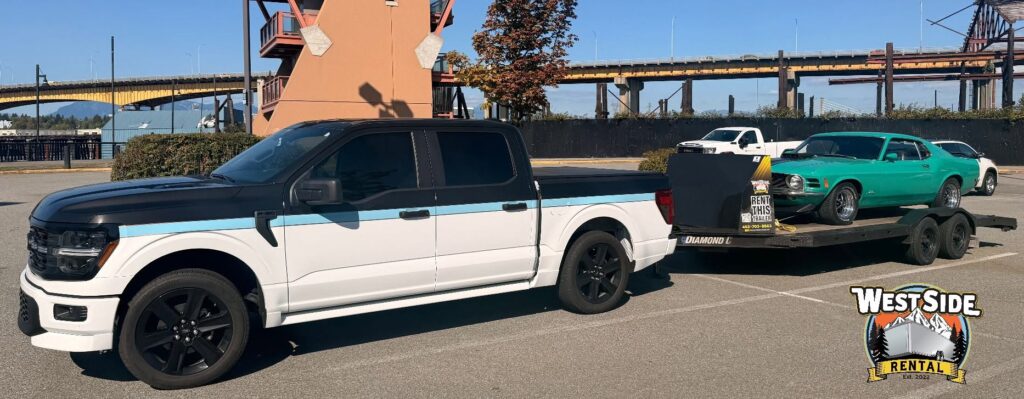
We mostly see that most of our flatdecks are used to rent hauling cars, motorcycles, tractors, and construction materials.
Common Mistakes to Avoid
Avoid these mistakes and you’ll travel more safely with flatdeck trailers:
- Overloading: Putting more weight on the trailer than its rated capacity can damage the trailer, strain your vehicle, and increase the risk of accidents. Always check the weight rating before you load.
- Incorrect Tire Pressure: Incorrect tire pressure make your riding uncomfortable and can be lose of your trailer. so before move to the road adjust tire pressure before every trip.
- Trailer Sway: Poor weight distribution, light tongue weight, or high speeds can cause dangerous swaying. Balance the load evenly and slow down to reduce sway.
- Poorly Maintained Trailers: Poorly maintained trailers like worn brakes, cracked decks, or broken lights can all lead to accidents or fines. Inspect your trailer before rental or maintain your trailer regularly to keep it safe and legal.
- Skipping Mid-Trip Checks: Vibrations loosen straps and chains during travel. Stop after the first 50 miles, then check regularly to tighten and adjust as needed.
Trailering Tips for a Smooth Rental
Towing a trailer is easy when you follow a few simple rules:
- Load 60% in the front: Place most of the weight in the front half of the trailer, close to your vehicle. It helps keep the trailer stable.
- Use strong tie-downs: Always strap your items down so nothing moves while you’re driving.
- Check your trailer lights and tires: Before you go, make sure the lights work and the tires are in good shape.
- Know how to load your trailer: Learn the right way to load an enclosed trailer, flat deck, or dump trailer before your trip.
- Match the right hitch and ball size: Your trailer should connect firmly to your vehicle’s hitch.
- Consider a truck rental for big jobs: If your car can’t tow a big load, renting a moving truck with a trailer may be the safer choice.
These tips will help you stay safe and avoid damage while towing.
Final Thought
Choosing the right trailer doesn’t have to be hard. Just think about what you’re hauling, check the weight, and match it with the right type and size.
We’re here to help you pick the perfect trailer—enclosed, flat deck, or dump—with clear pricing, top safety, and no hidden fees.
faq
Frequently Asked Questions
What are the basic tie-down rules for flatbed cargo?
Regulations require at least one tie-down per item for loads under 5 ft and 1,100 lbs. Add a second for longer or heavier articles. Secure loose parts and inspect often.
How do I properly strap down heavy machinery?
Use chains and binders rated for the weight. Attach at designated tie-down points, cross chains for stability, and tighten until the load is rigid. Check tension after a few miles.
Can I haul loose gravel or sand on a flatbed trailer?
Yes, but you must cover the load with a tarp or net to prevent debris from falling. Most states require a secured cover, and fines for unsecured loose materials are steep.
How often should I check my load during a trip?
Stop and inspect tie-downs after the first 10-15 miles, then every 150 miles or after rough road. Check straps, chains, and tarp tension, and retighten if needed.